

In a climate where political and personal attacks are raining down on all fronts, three of music's biggest superpowers have convened for a discussion geared towards healing.\
\
On Sat., June 25, the GRAMMY Museum, the Recording Academy's Black Music Collective, and MusiCares partnered up with the Universal Hip Hop Museum to host "Hip Hop & Mental Health: Facing the Stigma Together," a Black Music Month panel moderated by Nick Cannon.\
\
A wellness-centered occasion, the open-and-thoughtful conversation featured insights from XYION's Adrian Miller, Family Tree Services' Michael "Blue" Williams and Eric Brooks about the state of mental wellness and healthcare in hip hop, the music industry, and beyond. \
\
When it comes to unpacking unresolved traumas and devising a competent plan of action, there is no more important time than now. Together, we can implement systemic and structural changes to the personal and professional lives of our favorite artists.
With that in mind, here are five things that GRAMMY.com learned from the panel.
A Mental-Health Department Is Needed
To kick off the occasion, Nick Cannon, Adrian Miller, Michael "Blue" Williams, and Eric Brooks called for the music and entertainment industry to institute a mental-health department.
From their perspectives, this would help artists, executives, managers, and staff deal with personal and interpersonal issues.
"Managers are now supplementary family members [to these artists] as we're being there for them in a way that we've never had to do before," said Williams, who served as de facto manager for Outkast, Nas, Macy Gray, and others.
As he continued, record labels put so much money into maintaining the trauma of our favorite stars — but now, they need to invest in their well-being.
Hip-Hop Is An Undervalued American Export
Adrian Miller, the former VP of A&R at Warner Brothers Music Group and an industry leader in artist curation, was asked by host Nick Cannon to talk about how the recording industry profits from trauma.
"The culture is the major cultural export that the world enjoys," Miller said without hesitation. "But [only] the labels know the number of its value — and it is refusing to share."
Overall, the discussion highlighted that hip-hop has consistently been a challenge to those who want to use its voice, its lyrics, and its artists in a negative way.
According to Eric Brooks, the shift of hip-hop culture into mainstream dominance is "unavoidable." This means that more than ever before, compensation needs to be properly given to the creators.
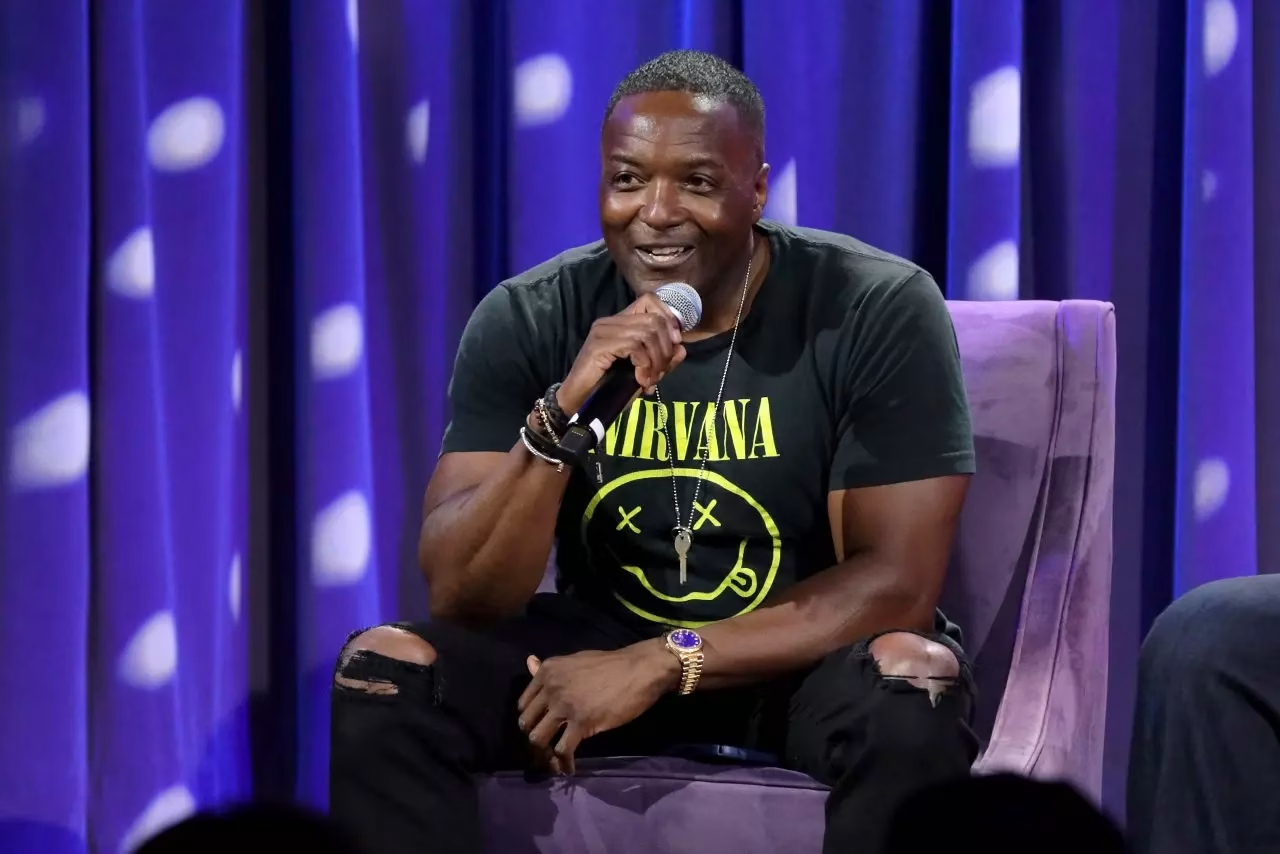
*"Hip Hop & Mental Health: Facing The Stigma Together" at The GRAMMY Museum on June 25, 2022 in Los Angeles, California. Photo: Rebecca Sapp/Getty Images for the Recording Academy*
Social Media Leads To Mismanagement Of Artists' Expectations
Most artists have a second job in projecting their professional and public lives on Twitter, TikTok, Instagram, and the like.
And in catering to millions of people with a curated lifestyle full of like-worthy excellence, the panel delved into the extreme highs and lows that music people face — thanks to the pressures caused by social media.
"These artists can easily perform in front of millions of music lovers — but when they get off stage, one tweet can have the power to crush them," said Michael "Blue" Williams. "No one can teach us that [as managers], but we need to [have the resources] to be prepared.
Despite the hype that comes with the push of a button, there needs to be a new way — through revamped media training or other methods — to ensure that artists' mental health comes first.
We Need To Talk About Burnout — And The Effects Of Trauma
The effects of this thing we call life can affect us greatly when we're alone.
During the "Hip Hop & Mental Health" panel, there was a frank industry-forward conversation about the elephant in the room — burnout — and how to detect it in industry professionals and artists.
"Artists are in a fight-or-flight mode when it comes to being in this game," said Eric Brooks.. "And there need to be strategies on how to deal with the inner battles that only happen in the mind and body."
Michael "Blue" Williams — who is no stranger to dealing with high-profile clientele — mentions that what happened to Kanye West and the late Chris Lighty should be an example of what breakdown and the effects of trauma look like.
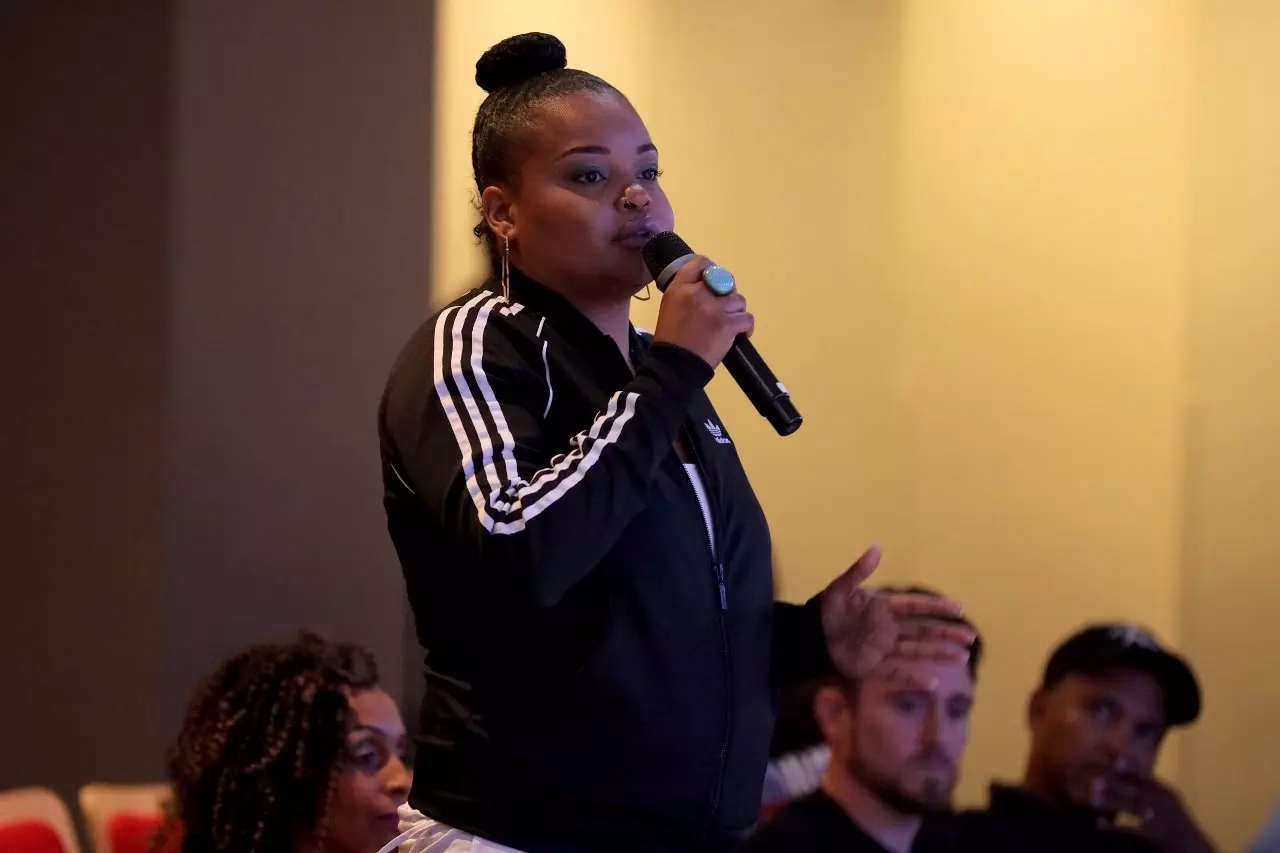
*Dr. Monique "Dr. Flo" Hedmann speaks at "Hip Hop & Mental Health: Facing The Stigma Together" at The GRAMMY Museum on June 25, 2022 in Los Angeles, California. Photo: Rebecca Sapp/Getty Images for the Recording Academy*
VIP Attendees Were A Big Part Of The Discussion
When the floor opened up to questions, there was no shortage of hands being raised — showing how crucial the attendees were to this conversation.
Also in attendance were some high-profile mental-health professionals, like JC Hall, LCSW (Hip Hop Therapy), Dr. Monique "Dr. Flo" Hedmann (Hip Hop Public Health), and Nakeya T. Fields, LCSW (Black Mental Health Task Force).
These parties shared extra insights on how to address the concerns that were brought up during the two-hour-plus chat, and provided a variety of helpful mental health and addiction resources.
All in all, they illuminated how suffering music people can get help — today, and for many years to come.
