Building on the momentum started at the 25th anniversary of GRAMMYs on the Hill in April, lawmakers have reintroduced two key pieces of legislation backed by the Recording Academy: the Nurture Originals, Foster Art, and Keep Entertainment Safe (NO FAKES) Act and the Protecting Working Musicians Act (PWMA).
On May 20, Sens. Chris Coons (D-Del.) and Marsha Blackburn (R-Tenn.), alongside Reps. Maria Elvira Salazar (R-Fla.) and Madeleine Dean (D-Pa.), introduced an updated version of the NO FAKES Act (H.R. 8915/S. 4591), broadening support for the legislation. The bicameral, bipartisan bill seeks to establish federal protections against the unauthorized use of a person's voice or likeness through AI-generated digital replicas while preserving free speech protections. Specifically, the NO FAKES Act, key legislation impacting the music industry today, would hold individuals and companies liable should they knowingly distribute unauthorized digital reproductions of an individual's image or voice.
The revised legislation also includes several updates intended to strengthen the bill and address stakeholder concerns. These changes include the addition of a counter-notice process to further safeguard free speech; exemptions for libraries, archives, and research institutions conducting academic or preservation work related to digital replicas; and technical modifications designed to improve implementation for music streaming services.
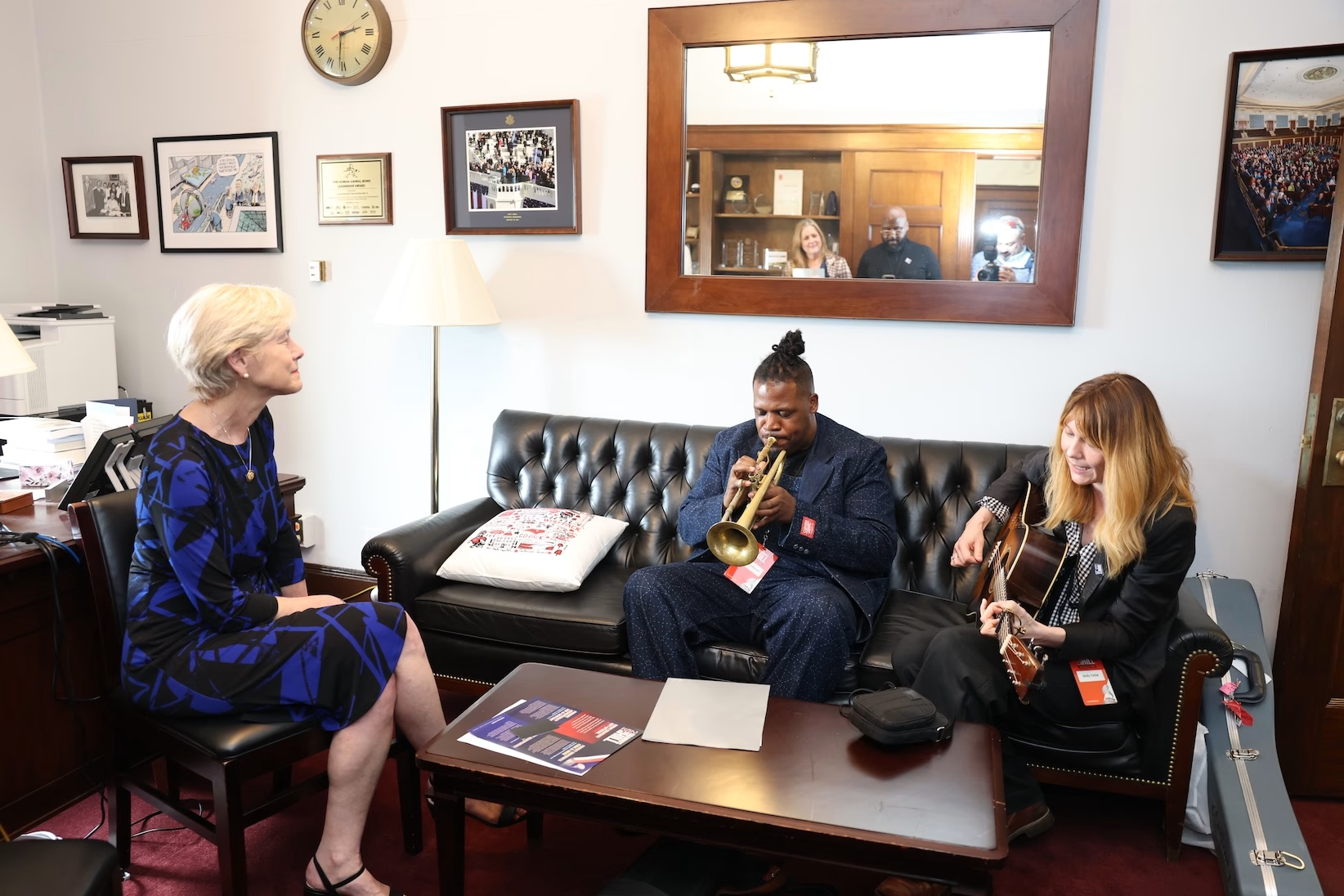
"The Grammy organization applauds the reintroduction of the NO FAKES Act," Recording Academy CEO Harvey Mason jr. said. "This carefully crafted legislation strikes the right balance in protecting artists from harmful deepfakes while recognizing that AI technology will continue to shape the future of the music industry. During this year's GRAMMYs on the Hill Advocacy Day, creators shared firsthand accounts with lawmakers about the growing impact of AI and the urgent need to protect human artistry. Their stories helped reinforce the momentum behind this legislation."
The updated NO FAKES Act has received support from a broad coalition across the entertainment, technology, labor, and advocacy sectors, including the Recording Industry Association of America, SAG-AFTRA, Motion Picture Association, YouTube, Universal Music Group, Warner Music Group, Sony Music, IBM, TikTok, OpenAI, Disney, Creative Artists Agency, Human Artistry Campaign, Nashville Songwriters Association International, AFL-CIO, National Association of Broadcasters, National Music Publishers' Association, ASCAP, and Music Artists Coalition, among others.
On May 21 — just one day later — Rep. Deborah Ross (D-N.C.) reintroduced the PWMA (H.R. 8994), legislation designed to allow independent artists and music creators to collectively negotiate compensation agreements with streaming services and generative AI developers.
Today, many independent musicians lack the leverage necessary to negotiate fair compensation in an increasingly concentrated digital marketplace. As a result, creators are often forced to bargain individually with large technology and streaming companies that wield significant market power. The PWMA would address this imbalance by establishing a limited antitrust exemption, allowing independent artists to join together when negotiating with streaming services and AI developers over the use of their music and creative works.
"The Recording Academy is pleased to support the Protecting Working Musicians Act and applauds Congresswoman Deborah Ross for her leadership," Todd Dupler, Chief Advocacy & Public Policy Officer for the Recording Academy, said. "Independent artists and songwriters face persistent challenges in an imbalanced digital marketplace. By enabling music creators to collectively negotiate for fair licensing terms, this legislation represents a meaningful step toward strengthening and promoting a more sustainable and competitive music ecosystem."
On May 28, Reid Wick, Director of Regional Advocacy and Member Engagement for the Recording Academy, participated in a round-table discussion hosted by Rep. Ross in Raleigh, North Carolina, centered on the economic and technological challenges impacting independent musicians. The event brought together artists, label representatives, creator advocates, and local stakeholders to discuss streaming compensation, creator rights, and the growing influence of AI on the music industry.
Participants discussed the difficulties many musicians face in earning sustainable income from streaming platforms, as well as the growing concerns surrounding AI-generated music and the use of creators' works without meaningful consent or compensation. The discussion reinforced the importance of advancing policies like the PWMA to ensure independent artists have a stronger voice in shaping the future of the music industry. The round table concluded with live performances from local musicians, celebrating the creative community the legislation is intended to support and protect.
As Congress continues to examine the evolving challenges impacting creators in today's digital age, the Recording Academy remains committed to ensuring artists and music professionals have a seat at the table. Want to make your voice heard? Take action today and urge your representatives in Congress to support the NO FAKES Act.
