The historic vote brings Congress one step closer to establishing the first comprehensive federal protections against the unauthorized use of a person's voice, image, and likeness through AI-generated digital replicas.
On June 18, the Senate Judiciary Committee unanimously approved the Recording Academy-backed NO FAKES Act by voice vote, advancing the bipartisan legislation to the full Senate for consideration. The historic vote marks a major victory for creators across the country, bringing Congress one step closer to establishing the first comprehensive federal protections against the unauthorized use of a person's voice, image, and likeness through AI-generated digital replicas.
This milestone builds on two years of advocacy by the Recording Academy and its members. Since the bill's initial introduction in 2024, the Recording Academy has championed the NO FAKES Act through direct grassroots engagement with lawmakers and congressional staff, coalition-building, and nationwide advocacy campaigns. The legislation has been a top priority at both GRAMMYS On The Hill and Music Advocacy Day, the Recording Academy's marquee advocacy movements, for two consecutive years, with Academy members from across the country urging Congress to take action to protect creators in the age of artificial intelligence.
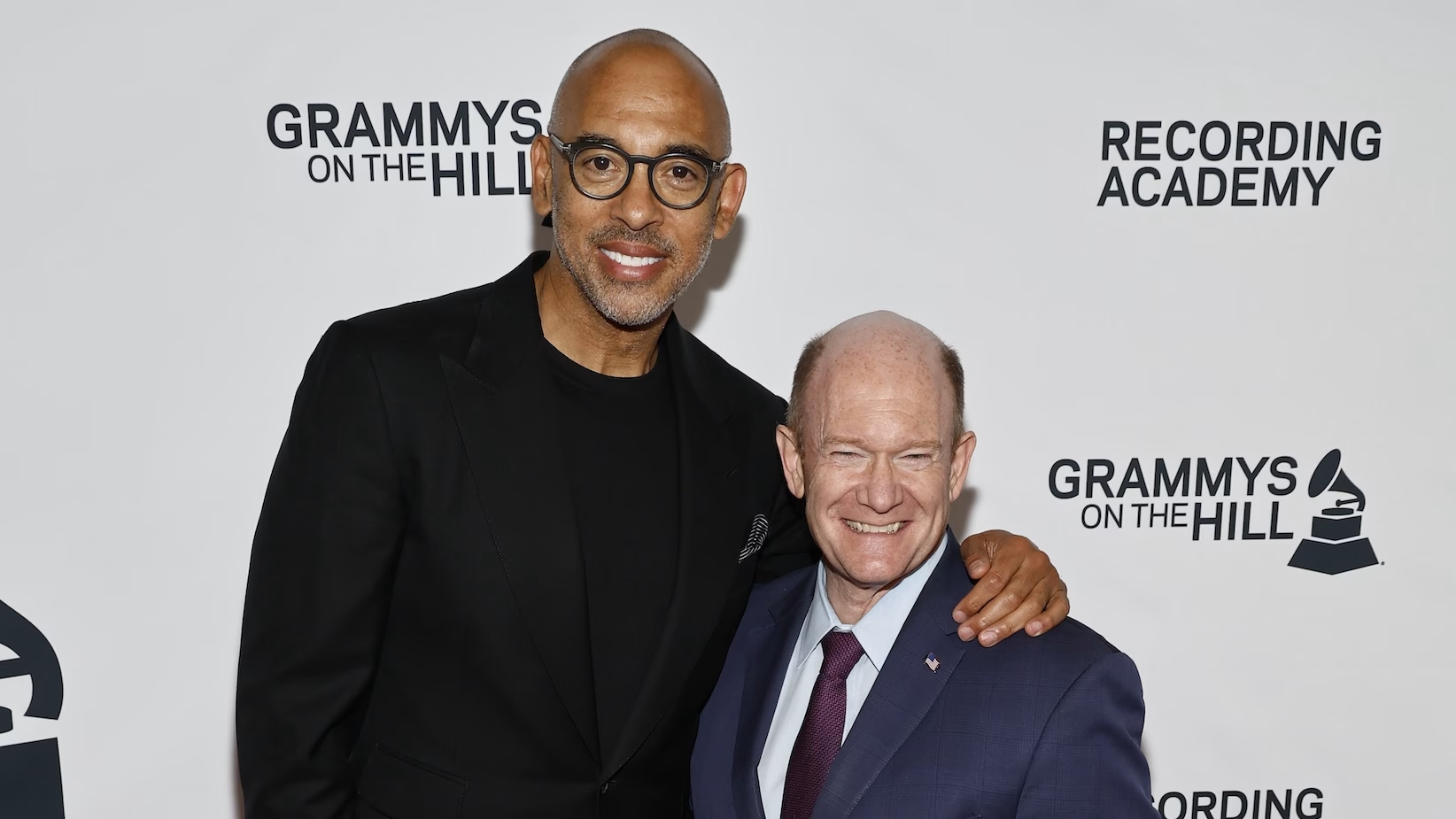
Earlier this year, the Recording Academy recognized lead sponsors Sen. Chris Coons (D-Del.) and Rep. Maria Elvira Salazar (R-Fla.) at the 2026 GRAMMYS On The Hill Awards for their leadership on the NO FAKES Act. The next day, Academy leaders, alongside Grammy-winning and Grammy-nominated artists, met with 40 members of Congress, including members of the Senate Judiciary Committee, to urge passage of the bill. "The Recording Academy applauds the Senate Judiciary Committee's [unanimous] approval of the NO FAKES Act. Today's vote represents an important next step in ensuring that artists are protected from the spread of harmful replicas online. As AI continues to reshape the music landscape, we strongly urge the full Senate to pass this essential legislation as soon as possible," Grammys CEO Harvey Mason jr. said in a statement.
Last month, Sens. Coons and Marsha Blackburn (R-Tenn.), alongside Reps. Salazar and Madeleine Dean (D-Pa.), reintroduced the NO FAKES Act, which included several updates intended to strengthen the bill and address stakeholder concerns. If enacted, the bipartisan, bicameral legislation would establish a federal right protecting individuals from the unauthorized use of their voice or likeness in AI-generated digital replicas while preserving strong free speech and First Amendment protections. The NO FAKES Act would also empower individuals to authorize or prohibit the creation and distribution of digital replicas of their voice or likeness and hold bad actors accountable for knowingly creating or distributing unauthorized reproductions. The legislation would also extend these protections beyond an individual's lifetime, allowing heirs and authorized representatives to manage and enforce those rights for up to 70 years after death.
The committee's unanimous approval reflects the growing bipartisan consensus that individuals deserve meaningful protections as artificial intelligence rapidly transforms the digital landscape. For the music community specifically, the committee's vote is a landmark moment that ensures that innovation and artistic integrity can coexist. As AI technology continues to evolve, the NO FAKES Act would provide long-overdue federal guardrails that protect artists, creators, and consumers from deceptive and unauthorized digital impersonations while fostering responsible innovation.
The legislation has attracted support from an unprecedented coalition spanning the entertainment, technology, labor, and advocacy sectors, including the Recording Industry Association of America, SAG-AFTRA, the Motion Picture Association, YouTube, IBM, TikTok, OpenAI, The Walt Disney Company, Creative Artists Agency, Human Artistry Campaign, Nashville Songwriters Association International, AFL-CIO, National Association of Broadcasters, and National Music Publishers' Association, among many others.
With unanimous committee approval secured, the legislation is now cleared for consideration by the full Senate, bringing supporters closer than ever to enacting landmark federal protections that will help ensure artists and individuals maintain control over their identities in the age of artificial intelligence. Want to continue the momentum? Urge your lawmakers to stand with artists and support the NO FAKES Act.
