
As precisely stated by political activist and GRAMMY Hall of Fame Inductee and Lifetime Achievement award recipient Paul Robeson, "Artists are the gatekeepers of truth. We are civilization’s radical voice." The proposition is no exaggeration.
In 1994, hip-hop trio TLC famously released their chart-topping single "Waterfalls" which saw immediate success, landing at the No. 1 spot on Billboard’s top 100 chart shortly after its release. At the 38th Annual GRAMMY Awards the song was nominated for Record Of The Year and Best Pop Performance By A Duo. But beyond its accolades, the song perhaps did even better to openly address the HIV/AIDS crisis on a global scale during a time when speaking out was needed the most.
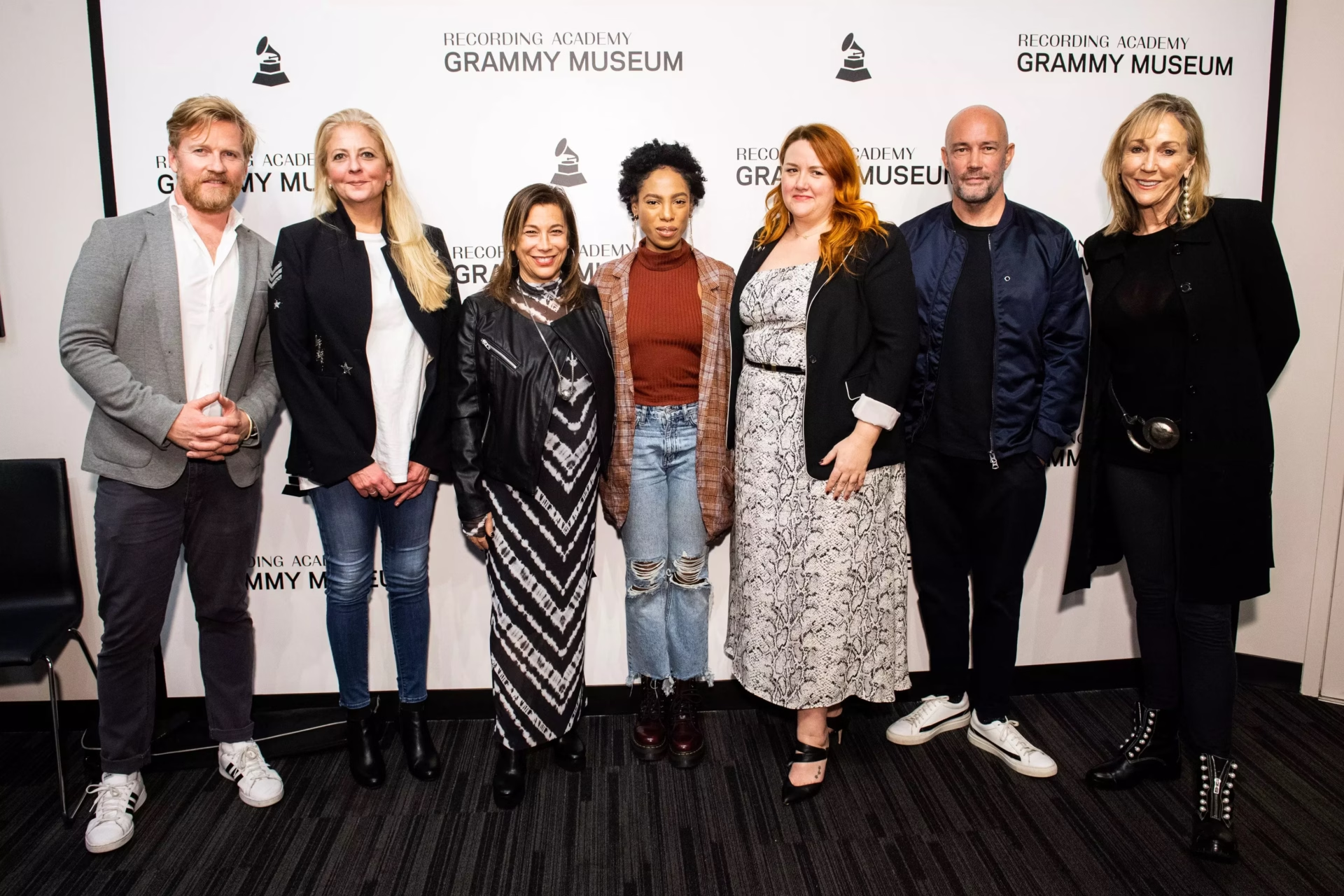
On Tuesday, Jan. 21, The GRAMMY Museum’s Clive Davis Theater played host to the panel "STORIESTelling: Music and HIV/AIDS" which focused conversation on the devastating impact of HIV/AIDS on artists, music communities and the music industry, as well as the impact of music on HIV/AIDS. The free-to-the-public panel was brought to life in collaboration with STORIES: The AIDS Monument as a part of the GRAMMY Museum’s GRAMMY week panel series, "Music in Action: conversations with those diversifying, preserving and changing the music industry."
Featured panelists included performing artist and "Poz Roz" actress Chauntae Pink, Director of Talent and Entertainment Relations at ONE Abby Sasser, Moscham CEO and former EMI Music Chairman Mark Poston, Manager Rebecca Drucker and Performer, AIDS Activist and STORIES Board Member Sherri Lewis. The panel was moderated by Producer and Content Creator John Daley Kennedy.
Read More: Women In Music And Film Talk Self-Confidence & Inclusion At The GRAMMY Museum
Lewis was a member of the '80s pop-band Get Wet, whose top 40 hit "Just So Lonely" helped launch music videos on MTV. She tested positive for HIV in 1997 and subsequently followed a path of activism, offering support and fully standing in a message of HIV empowerment for survivors of the virus as well as promoting HIV prevention through involvement with various HIV/AIDS service organizations. "Being able to educate young people based on my own experiences so that they don’t have to go down that path is what gives it purpose," she shared.
During the 1980s, also known as the "plague years" for HIV/AIDS, AIDS was considered a death sentence. There was no known treatment for the virus and HIV/AIDS was negatively stigmatized by the spreading of disinformation and heightened media propaganda, only causing more confusion and fear about HIV/AIDS and how it might affect us.
As for music’s impact on HIV/AIDS, Poston explained that its biggest push forward came in the form of speaking out and spreading awareness. "Music and artists help open the discussion and create the awareness," he said. "That’s something that has continued right up until the present day. Artists have a voice, they’re often leading the culture and their tapped in with young people." He continued, noting key moments such as Freddie Mercury’s 1992 HIV/AIDS tribute concert, which garnered over 1 billion viewers worldwide. After contracting HIV, he explained that Mercury’s death helped put a face to the devastation behind the virus for music communities, who began to rally together around the cause after his passing.
The fight against HIV/AIDS itself, for music communities and beyond, is not over. Knowledge around HIV/AIDS is often still mystified and links between healthcare and poverty are intrinsic. According to Sasser, HIV/AIDS is still the number one killer of young girls around the world and spikes in infection amongst black and brown communities and women of color are evident. She is working alongside the STORIES AIDS monument team, continuing to keep the fight for awareness and action alive. Education and storytelling are key in this mission, she stated, which hopes to memorialize lives lost, celebrate activism around the virus that has occurred and to equip future generations with the knowledge necessary to effectively mobilize around HIV/AIDS moving forward. You can find more information on STORIES the AIDS monument here.
The GRAMMY Museum’s educational programming will continue throughout the week including discussions on Careers in the Music Industry, Creating Collaborative Communities for Female Artists and more. For more information on the scheduled events, visit the museum’s programs page here.
Be sure to stay tuned to GRAMMY.com throughout the week for your behind-the-scenes pass into 2020 GRAMMY Week events, including the 62nd Annual GRAMMY Awards airing live on CBS this Sunday, Jan. 26, featuring performers Lil Nas X, Billie Eilish, Lizzo and more.