
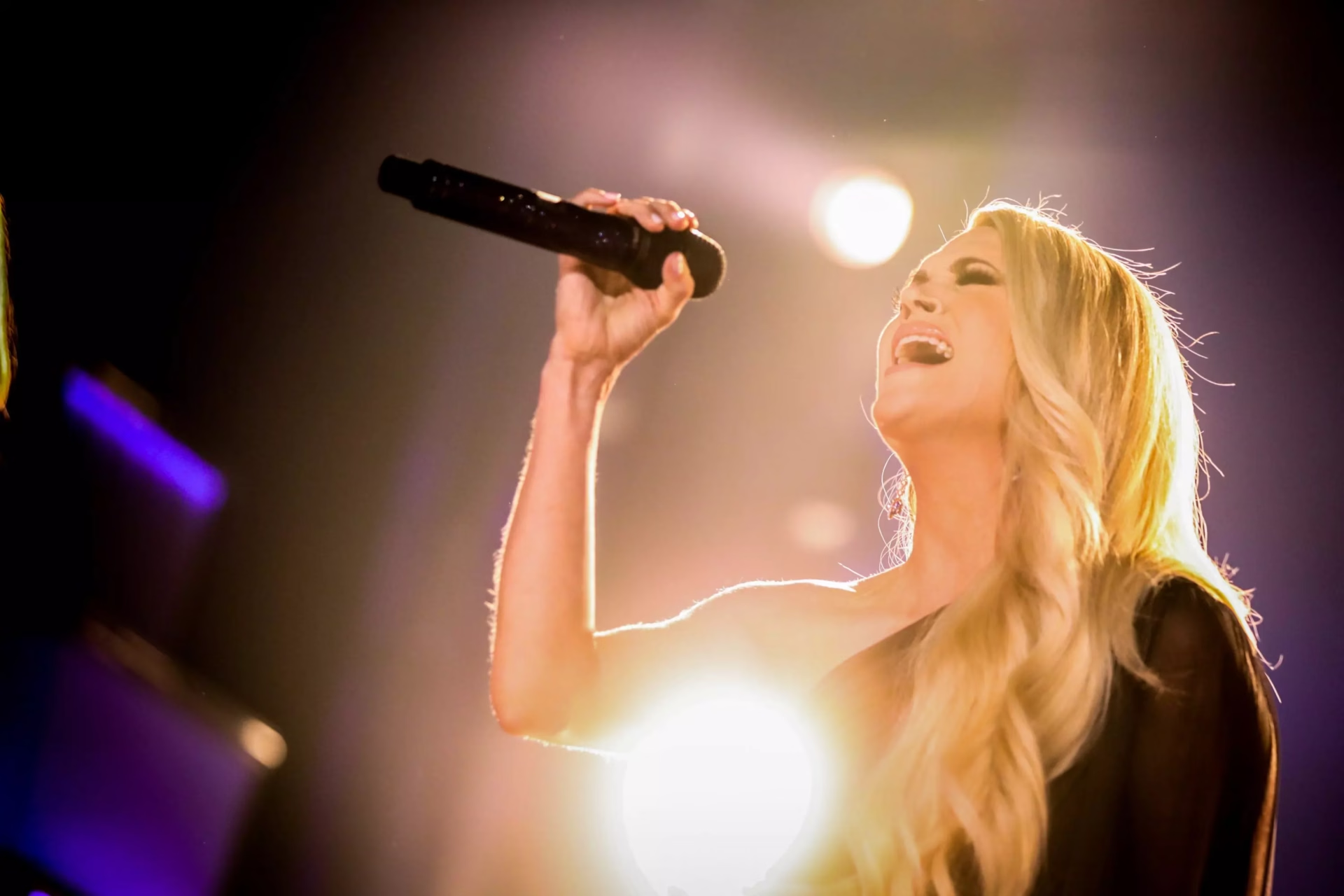
The picture of female underrepresentation in country music continues to become clearer, as a new study conducted by the USC Annenberg Inclusion Initiative finds only 16 percent of the top charting country songs from 2015-2018 were performed by female artists.
<blockquote class="twitter-tweet" data-lang="en"><p lang="en" dir="ltr">Challenging practices that exclude communities from access and opportunity is what we do. Country music has a large gender and age gap. They purport that audiences won't listen to female artists. We have heard that before! Fiction then. Fiction now <a href="https://twitter.com/hashtag/timeforchange?src=hash&ref_src=twsrc%5Etfw">#timeforchange</a> <a href="https://twitter.com/iHeartRadio?ref_src=twsrc%5Etfw">@iHeartRadio</a> <a href="https://t.co/XplR0vZvM9">pic.twitter.com/XplR0vZvM9</a></p>— Annenberg Inclusion Initiative (@Inclusionists) <a href="https://twitter.com/Inclusionists/status/1114183812303314945?ref_src=twsrc%5Etfw">April 5, 2019</a></blockquote><script async src="https://platform.twitter.com/widgets.js" charset="utf-8"></script>
The study examines 500 songs on the Year-End Billboard Hot Country charts over the past four years. Perhaps most concerning is that, while 2018's number, 19 percent, was higher than 2014 and 2017, it was equal to 2016, indicating the situation is not necessarily improving.
Percentages of women songwriters on the country charts were equally bleak. When analyzing 200 country songs from the same four-year span, the study found only 12 percent of top-charting country songs were written by women, this compared to 14 percent on the pop charts.
Another alarming statistic the study revealed states the average age of top male artists is 42, while the average age of top female artists is 29. "Women are not only disadvantaged in the country market," the study reads, "But their age illuminates a sell by date that their male counterparts do not experience."
The problem has received increased attention recently. Just last year, GRAMMY winner Carrie Underwood spoke out specifically against the gender gap in country radio. In an interview with Elaina Smith on Nash Country Daily's "Women Want To Hear Women" podcast, Underwood pointed out the lack of women on country radio has only gotten worse, saying, "Even when I was growing up, I wished there was more women on the radio, you know. And I had a lot more that there are today."
<iframe width="620" height="349" src="https://www.youtube.com/embed/kzQ50oDT0Ao" frameborder="0" allow="accelerometer; autoplay; encrypted-media; gyroscope; picture-in-picture" allowfullscreen></iframe>
First-time GRAMMY nominee this year Ashley McBryde echoed Underwood's reflection, saying, "You look at the '90s, they're were as many if not more strong female artists as there were strong male artist, and they all got along. Nobody was bitching about one another. I think that's the wrong way to go. Country music is a big-ass place. There's room for all of us."
Underwood and McBryde are correct. A 2016 report by Stanford University researcher Devarati Ghosh confirmed that major labels have brought fewer female artists to radio in the 2000s compared to the mid-'90s. In 2017 a report by the Tennessean found the percentage of female-only country songs on the radio has indeed dropped since 2016.
The USC Annenberg study follows their 2018 report on gender imbalance in recording studios, which stated just 2 percent of producers and 3 percent of engineers/mixers are women. The Recording Academy Task Force on Inclusion and Diversity have since launched the Producer and Engineer Inclusion Initiative aimed at course correcting the gender imbalance.
Modern country trailblazer Kacey Musgraves, whose 2018 album Golden Hour took home the GRAMMY for Album Of The Year plus three more awards in country categories earlier this year at the 61st GRAMMY Awards, addressed gender gap in country in an interview with Billboard last year. Musgraves, who has expressed her vision for moving past the age-old gender barriers in country music.
"I'm hoping we can get back to a musical world where talent and uniqueness got you further than politics," Musgraves said, "Where the quality of a song was what would make you a household name. Can you imagine what that landscape could sound like? What future generations it could inspire?"
<blockquote class="twitter-tweet" data-lang="en"><p lang="en" dir="ltr">We're honored and thankful to <a href="https://twitter.com/KaceyMusgraves?ref_src=twsrc%5Etfw">@KaceyMusgraves</a> for making music education a priority and selecting the Museum as her <a href="https://twitter.com/Variety?ref_src=twsrc%5Etfw">@Variety</a> Power of Women charity! <a href="https://t.co/jev7hDRG9c">https://t.co/jev7hDRG9c</a> <a href="https://t.co/xSNj9gzhIn">pic.twitter.com/xSNj9gzhIn</a></p>— GRAMMY Museum (@GRAMMYMuseum) <a href="https://twitter.com/GRAMMYMuseum/status/1113132707360526336?ref_src=twsrc%5Etfw">April 2, 2019</a></blockquote><script async src="https://platform.twitter.com/widgets.js" charset="utf-8"></script>
Underwood took action last year, building her 2018 tour with an entirely female bill, saying it was her way of supporting women "who deserve to be there." Perhaps her insight provides a glimpse
"It’s good when women support women," said Underwood. "One of the good things that has come out of these conversations has been the rallying that we’ve had for each other, behind each other. We all need more of that in our lives.”
The Annenberg report on women in country concluded, "The most effective solution is for the industry to undertake a collective effort to address disparities," and it continued to lay out recommendations for ways labels, terrestrial radio, advocacy groups, streaming services and live entertainment professionals can take action. You can read the full report here.
Closing The Gap: How Latina Artists Are Combating Gender Inequality In Urban Music
