"I see a little silhouetto of a man/Scaramouche, scaramouche will you do the fandango?"
The lyrics are so iconic, inevitably you'll know the song they belong to in an instant — Queen's epic "Bohemian Rhapsody."
<iframe width="620" height="349" src="https://www.youtube.com/embed/HaZpZQG2z10" frameborder="0" allow="autoplay; encrypted-media" allowfullscreen></iframe>
While the rock opera has arguably outshined the rest of the album that spawned the unlikely hit, A Night At The Opera was Queen's aptly titled fourth studio LP. Released Nov. 21, 1975, it contained other would-be favorites such as "Love Of My Life" and "You're My Best Friend." By all accounts, it wasn't an easy album to get down on tape, but it also became one of Queen's most successful and influential works of art.
Marking A Night At The Opera's latest achievement, it was inducted into the GRAMMY Hall Of Fame as part of the class of 2018, an honor recognizing significant recordings that have shaped our musical heritage. To celebrate, let's take a closer look at these seven facts about the making of this classic Queen album.
1. The Marx Brothers Inspired The Title
<iframe width="620" height="349" src="https://www.youtube.com/embed/tu6COUl3fx8" frameborder="0" allow="autoplay; encrypted-media" allowfullscreen></iframe>
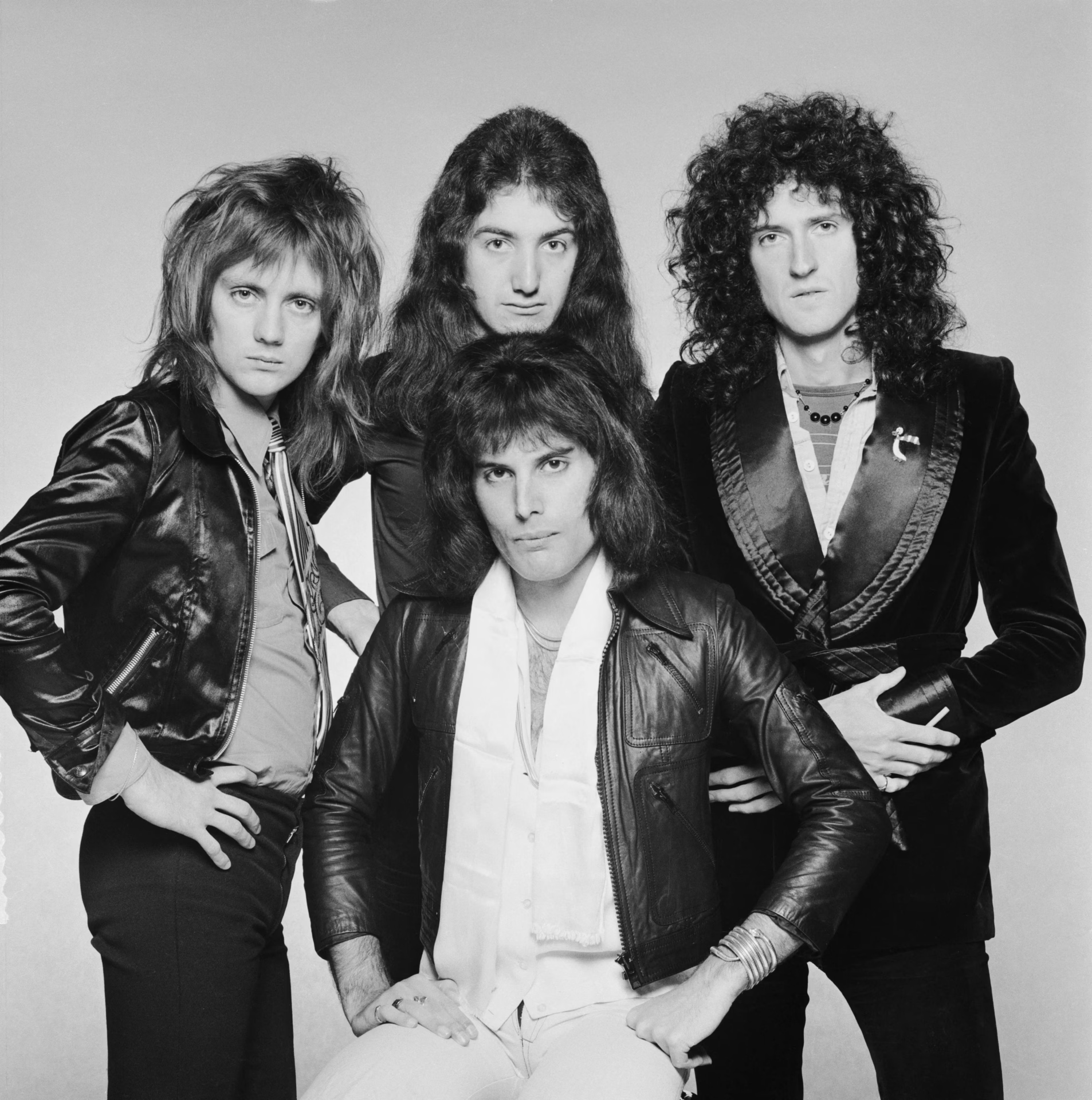
As fans of the Marx Brothers' filmography, it seemed to make perfect sense that Queen — lead singer Freddie Mercury, guitarist Brian May, drummer Roger Taylor, and bassist John Deacon — would name their fourth album after one of their films. A Night At The Opera comes from the 1935 Marx Brothers comedy of the same name, which the band reportedly watched in the studio during the recording of the LP Their 1976 follow-up, A Day At The Races, also borrowed its title from the Marx Brothers.
2. The Album Cost A Fortune
There was nothing cheap about recording A Night At The Opera, both from a time and financial standpoint. Getting the massive "Bohemian Rhapsody" down took three weeks alone, and the rest of the album stretched on as Queen worked tirelessly with producer Roy Thomas Baker. Most notably, the album cost the equivalent of $500,000 today to make in 1975, which earned the distinction of being the then-most expensive rock album ever made. This could have something to do with the fact the band recorded in six studios across the U.K.
3. Manager Drama Makes The Cut
<iframe width="620" height="349" src="https://www.youtube.com/embed/kqVpk0qxmfA" frameborder="0" allow="autoplay; encrypted-media" allowfullscreen></iframe>
Prior to 1975, Queen struggled to make ends meet despite having success with their three previous albums. It turns out the issue was a management deal gone horribly wrong. The band fought to free themselves from the bad relationship, and when they were successful, Mercury penned a scathing revenge track recounting the experience — "Death On Two Legs (Dedicated To …)."
"'Death On Two Legs' was the most vicious lyric I ever wrote," Mercury said, according to QueenOnline.com. "It was so vindictive that Brian felt bad singing it. No one would ever believe how much hate and venom went into the singing of that song, let alone the lyrics themselves."
4. Recording "Bohemian Rhapsody"
Queen's magnum opus, and arguably their most recognizable song of all time, is the rock opera "Bohemian Rhapsody." Clocking in at more than six minutes, it defied all conventions. And while we know some of the song's references — Scaramouche is a character from the Italian clown tradition, Galileo refers to the famous astronomer and Bismillah is the first word in The Qu'ran — we may never know the song's true meaning since Mercury never revealed it. To get "Bohemian Rhapsody" on tape, particularly the choral parts, Mercury, May and Taylor reportedly sang 180 overdubs. By the end of the process, the tape had been used so many times it was see-through.
<iframe width="620" height="349" src="https://www.youtube.com/embed/fJ9rUzIMcZQ" frameborder="0" allow="autoplay; encrypted-media" allowfullscreen></iframe>
5. Making Music Video History
With its growing popularity, Queen realized they would need a music video for "Bohemian Rhapsody," largely because they didn't want to appear on the British TV show "Top Of The Pops." So the band set aside £3,500, brought on director Bruce Gowers and threw together a music video in just four hours in a space they were using to rehearse for a tour. The result was a rather simple video visually dominated by the band's singing heads. But like the song itself, the end result became so popular it's credited with helping usher in the MTV music video craze of the '80s.
6. Wayne's World? Excellent …
<iframe width="620" height="349" src="https://www.youtube.com/embed/kMdgOF0e-lI" frameborder="0" allow="autoplay; encrypted-media" allowfullscreen></iframe>
Remember that scene in Wayne's World where Mike Meyers and crew lip sync "Bohemian Rhapsody" in the car? That moment has become a classic music moment in film, but it also gave way to a resurgence of interest in the popular A Night At The Opera track. When the Wayne's World soundtrack hit No. 1 on the Billboard 200 in 1992, "Bohemian Rhapsody" also landed at No. 2 on the Billboard Hot 100, bringing the Queen hit to a new generation of fans.
7. GRAMMY Awards Recognition
Besides A Night At The Opera's induction into the GRAMMY Hall Of Fame this year, the album earned Queen other GRAMMY recognition. Most notably, "Bohemian Rhapsody" earned the rockers their first two GRAMMY nominations at the 19th GRAMMY Awards, including nods for Best Arrangement For Voices (Duo, Group Or Chorus) and Best Pop Vocal Performance By A Duo, Group Or Chorus. "Bohemian Rhapsody" earned induction into the GRAMMY Hall Of Fame on its own in 2004 and Queen was also honored with the Recording Academy Lifetime Achievement Award in 2018.
