
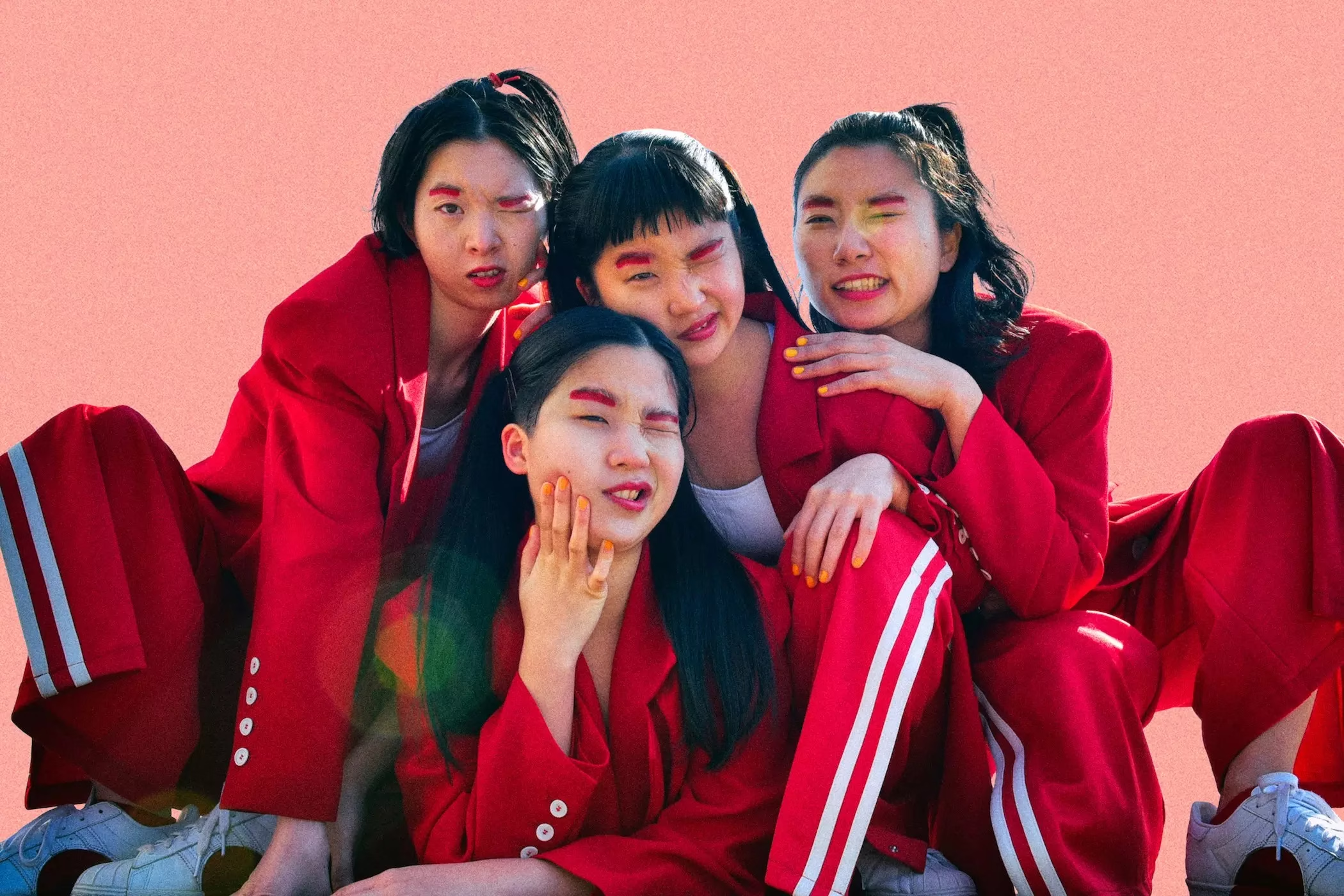
CHAI are determined to stand out. Hailing from Japan, a country whose culture praises uniformity, CHAI are making rock-influenced dance music for people who want to move to their own beat. But they're breaking more than one stereotype: Yuuki (bass), Kana (guitar), Mana (vocals) and Yuna (drums) are on a mission to change the ideals placed on women's bodies, specifically with the term "cute," or in Japanese, "kawaii."
So CHAI came up with the term "Neo Kawaii," which means that all girls are pretty from the moment they are born. "There is not a single girl that is not kawaii," CHAI state on their website. "You don't need to have big eyes or have skinny legs to be kawaii! Not everyone needs to follow the stereotypical image of kawaii."
The message was heard loud and clear across the lawn at Union Park at their Pitchfork Fest set on Saturday. In matching outfits and ponies, CHAI energetically and enthusiastically took Chicagoans through songs from their punchy debut album, PUNK, which recalls dancefloor staples like Basement Jaxx, Gorillaz, CSS, and Tom Tom Club. The 10-track album, which is more inspired by the spirit of punk than the genre itself, showcases confident lyrics that proclaim with certainty: "I don’t know about the world, but I know me... What a cute girl I am!"
<iframe width="620" height="349" src="https://www.youtube.com/embed/z-aKOc5nN2c" frameborder="0" allow="accelerometer; autoplay; encrypted-media; gyroscope; picture-in-picture" allowfullscreen></iframe>
The Recording Academy spoke with the charming quartet about playing overseas, pushing back against the Japanese interpretation of "cute," covering ABBA's "Dancing Queen" and more.
How's your time at Pitchfork Fest going?
Yuna: We were super exited. We're so happy to be here.
Yuuki: We're having a great time. It's actually our dream.
Kana: I also feel like this is our dream so we're super exited to be here and we're blessed.
Yuna: It's actually not just our dream to play America, but [to play] Pitchfork itself. We actually were written about in Pitchfork, which is amazing for us too. Also we just want to do everything, we wanna go to every country, we want to win a GRAMMY, we want so many things.
Yuuki: Yeah, we are super excited to be able to do anything in America. I think being able to tour in the States is our number one thing.
How is it singing exclusively in Japanese to an English-speaking audience?
Kana: We don't even think about that at all.
Yuuki: Yeah, to be honest with you, we never thought about that at all. We don't think about whether the lyrics gonna be understood or not. For us it's more soul, music is universal, and I don't think you necessarily need a language for people to understand where you are coming from. We just love going out for the fact that the music, the sound is what gets the people and relates with people.
How did you all meet?
Mana: We were all friends, form the beginning. Myself, my twin sister Kana and Yuna, we went to the same high school. We were in the same music club together, so that's where we actually started jamming and doing the music thing. Yuuki we met later on in college.
<iframe width="620" height="349" src="https://www.youtube.com/embed/YMGf3zyhG94" frameborder="0" allow="accelerometer; autoplay; encrypted-media; gyroscope; picture-in-picture" allowfullscreen></iframe>
I want to talk about your album, PUNK. What was the inspiration behind it?
Yuuki: This album PUNK, it wasn't based on the genre. It's actually based on the feelings, the mentality of being, the spirituality of being punk. Living in your truth, not letting anybody dictate how you wanna live your life. We were influenced by a lot of music, a lot of musicians: Superorganism, Justice and ERD. A lot of the musical inspirations have actually played a part in our songs in that PUNK album.
A lot of your music touches on body image and reclaiming the word "cute." What inspired you to make this album about that?
Yuuki: For us you know, doing not only this album but also our first album pretty much our theme is "Neo-Kawaii," which translates to "New Cute." I think in Japan at least, the word "cute" is a big compliment. It's sexy, beautiful, all those type of words are all intertwined with the word "cute." I notice in the States sometimes they might refer to people as cute when they are little or when they are shorter or like, "Oh you know you all, you so cute" like a little kid. But in Japan cute is actually considered more like a beautiful word. For us, because we didn't fit into those standards of cute in Japan, we decided to create this word, "Neo-Kawaii," which is the "New Cute" to represent everybody that doesn't fit into those standards that are set by society right now. For us, we wanted to create this word so that we can compliment one another for those who don't feel like they fit into the traditional 'Kawaii' or cute definition.
Is there anything you want U.S. audiences to know about you as a band?
Kana: We want you to see freedom when you see us.
Yuuki: We want you to see something you have never seen before.
Yuna: Something you never heard before.
Mana: Something you've never seen before. For us, we don't wanna just be just a band. We wanna be looked at as more than just a band.
Would you call your music empowering?
Yuuki: We're not really conscious about it when we're making the songs, as far as whether they are empowering or not. It's actually more so our personal experiences in Japan that we just write about, that just so happens to empower people. One of which is, because in Japan, everybody tends to be very uniform, everybody tends to do the same thing, dress the same way, and if you are that one person, the outsider, who does something a little bit different, you're automatically turned down or slapped down or told, "Hey, what are you doing, you're not supposed to be doing that," and we did not really like that. So for us it was more like, okay, what do we do to empower people who kinda feel like us who kinda feel like outsiders in this society where everyone is the same? I guess that's what translated into empowerment, naturally.
<iframe width="620" height="349" src="https://www.youtube.com/embed/jowGY1aYmMo" frameborder="0" allow="accelerometer; autoplay; encrypted-media; gyroscope; picture-in-picture" allowfullscreen></iframe>
I loved your cover of ABBA's "Dancing Queen." What made you want to cover ABBA?
Yuna: We all love ABBA. That's particularly because it's like a very motherly type of vibe that ABBA gives, and we like that whole motherly type of vibe. We wanted to give that to everybody on the stage and make people feel wholesome, and we chose ABBA to cover for our last tour.
Is there a song on the album that you feel particularly close to?
Mana: For all of us, we really love the song "Curly Adventure." It was the first time that we worked with an outside engineer, not a Japanese engineer. We worked with an American engineer for that one, and also the sound was very different for us. That was the only one that was different. I think that's what we really like, that song particularly, it was totally different for us, as something very new for CHAI, something very fresh.
<iframe width="620" height="349" src="https://www.youtube.com/embed/YoCOh2r6ML0" frameborder="0" allow="accelerometer; autoplay; encrypted-media; gyroscope; picture-in-picture" allowfullscreen></iframe>
What's been your greatest tool as artists?
Yuna: Food is number one. We love to eat, you know? Anything food-related. Particularly meat. Any type of meat is great with me.
What's your favorite part of American culture?
Yuuki: The friendliness. Everyone is super friendly. They talk to people they don't know. They embrace one another, they hug each other. People just naturally hold the door for one another. Just really simple things like that. It's totally different.
Kana: For me too, it's the same thing. I feel that people are just super loving and we just feel the love. America is totally different that way, people say goodnight to each other on the elevator.
You mentioned food... What do you think of Japanese food in the States? You can be honest.
Yuuki: I think ramen is the best thing here.
Mana: Yeah, ramen I think is really good here but everything else I don't know.
Kana: Yeah, I don't know of anything else besides ramen.
Yuna: California rolls and also salmon and avocado rolls are really good here. But everything else? Hmm. That's a question mark.
Rico Nasty On Being Fearless & The Importance Of Highlighting Black Women's Emotions
