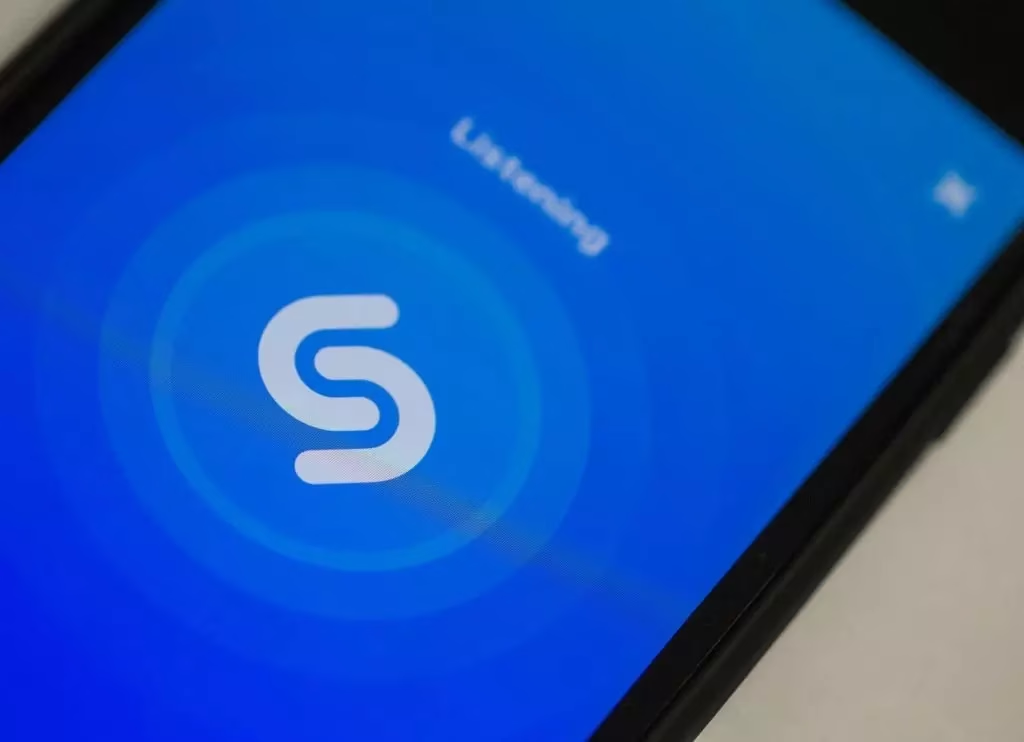
There are a few ways to look at the Nov. 1 news that Shazam iOS users are now able to share music using Instagram Stories, but all are connected by the increasing ease-of-use to let more people share their favorite music casually. It was just over a week ago that SoundCloud added this feature, too, and as we noted then, Instagram is now used by more than half of internet users under 30. Shazam-sharing to Instagram also will roll out to Android users sometime in the future.
<iframe width="620" height="349" src="https://www.youtube.com/embed/3Zui2AAB0-0" frameborder="0" allow="accelerometer; autoplay; encrypted-media; gyroscope; picture-in-picture" allowfullscreen></iframe>
Music engages social media users more than any other category of content. One way of looking at this new emphasis on making it easy for users to share their music the way they like is in contrast to earlier years when people claimed they had no legal way to share music. The culture of platforms like Instagram to enable meaningful messages, spurred by impulse or planning, to shoot out on social is still growing. The hope was always that legal music sharing would thrive because nobody was worried about lawsuits. Today's sharing ecosystem makes much of that dream a reality, but the end is not in sight.
Another way to look at the new feature is to turn the whole music-app ecosystem upside down and think about it in terms of major platforms. Apple bought Shazam late last year and Facebook owns Instagram. Some reacted that the iOS-first rollout is no surprise because Apple is favoring its own users, but over the long term Apple plans to offer Shazam without advertising to Android users as well. It is perhaps more interesting to see this as an expansion of the way Apple wants its Shazam users to live their lives online. For Facebook, there are similar lifestyle-choice issues to why it owns Instagram, future-proofing its dominance with an alternative that has been a consistent youth magnet.
Whether this is viewed as something for everybody or more as the latest "no-brainer" handed down to us by big platform companies, sharing music like this is potentially good for everyone in the big picture. Letting others know what music someone likes has always been part of people's unique identity and taste. Now it's almost an online industry of its own, and it's still growing.
Ed Sheeran, J Balvin Are Shazam's Most Discovered Artists Of 2018 So Far
