
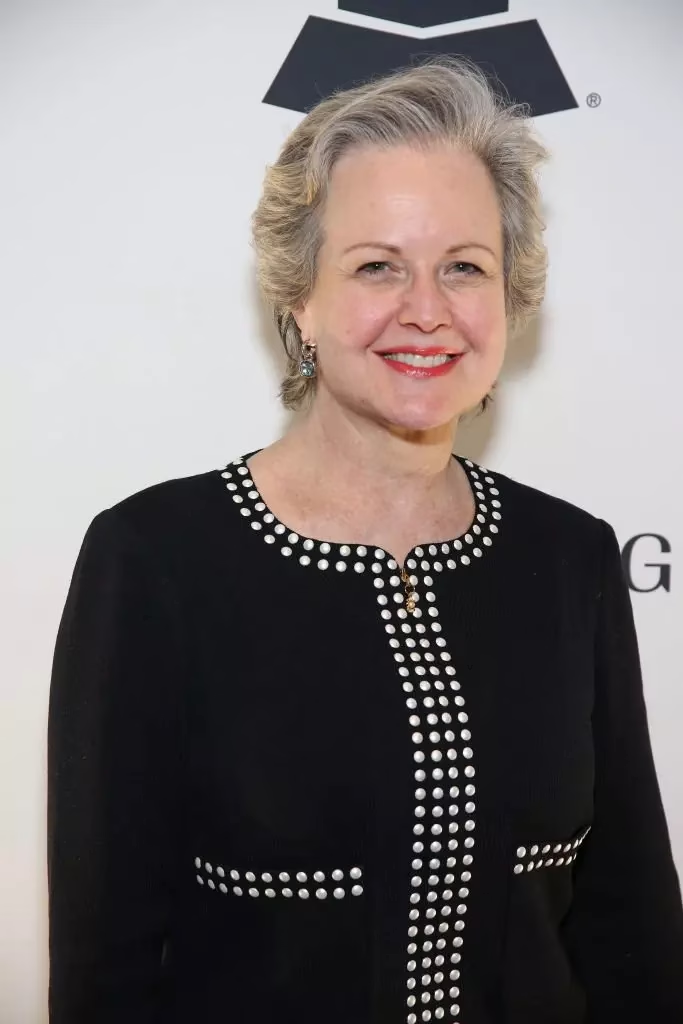
Women from different areas of the music industry came together for A Celebration Of Women In Music at the GRAMMY Museum on Monday, Feb. 4, 2019, where they discussed how music has shaped them, mentorship, their experiences in the industry, and how they got their foot in the door.
A collaboration between the GRAMMY Museum Foundation and the GRAMMY Museum Education Coalition, Exploring the Building Blocks of a Music Industry Career aimed to inform the audience, which was made up of a predominantly diverse group of students from middle school to college, how women have successfully navigated the various sides of the industry from the creative side to business and beyond.
"You are the future, you are the next generation. You deserve equality. You demand equality," Recording Academy Vice Chair of Board Of Trustees Ruby Marchand and panel moderator said speaking to the young crowd. "You ... are our future, and we are here to help you in every single way we can."
While the music industry may be vast in size and made of several different career areas, there are gender equality gaps throughout. According to the Women In Music organization, there is roughly a 70 to 30 male to female gender divide across all regions around the world. In the U.S. and Canada, 15 percent of label members are primarily owned by women.
In 2018, Professor Stacy L. Smith and the University Of California Annenberg Inclusion Initiative released a study that said that just 22.4 percent of the performers across the 600 most popular songs from 2012 to 2017 were female; only 12.3 percent of songwriters of the 600 most popular songs of the last six years were women, and a devastatingly low two percent of producers across 300 songs were female.
Panelists also offered insight on music education, feeling validated in their careers, mentorship and how they found the right job for them. When asked about what role music education played in their lives, Susan Nesbitt from the Member Engagement Lead, World Economic Forum said being in bands taught her how to let others shine.
"I played in bands my whole life—I learned how to compromise, I learned how to give up the stage, I learned how to make way and support other people. You need to do that for the rest of your life, so find yourself and help others," she said.
Nesbitt also touched on the importance of finding your voice. "That is important for the rest of your life, to find the authenticity that makes every single one of you very different—hang on to it at all costs always," she said.
Before the panel came to a close, Tina Fasbender in business management and President at Fasbender & Associates had some last words for students regardless of what side of the industry they were interested in:
" Approach every opportunity with an open heart and an open mind, and just get comfortable with yourself. Don't become someone else in order to fill into a role ... be a life-long learner ... and absorb information, take what people have to offer you and don't set any limits for yourself ... and go for what you want," she said.
Other panelists included Adina Friedman (Artist Manager/Partner, Friends At Work), Anjali Southward (Head of Music Publishing and Business Development, International at Facebook), Brenda Robinson (Director of Business Development, Greenberg and Glusker), Jenny Reader, (President/Chief Creative Officer, Fearless Records), Monika Tashman (Partner/Lawyer, Entertainment, Media & Technology Practice, Fox Rothschild LLP), Neeta Ragoowansi (Board Officer and Former President, Women in Music and SVP, Biz Development & Legal Affairs/Co-Founder, NPREX), and Brenda Robinson (Entertainment Attorney).
Another panel called How To Create A Collaborative Community To Help Mentor Young Female Artists featured advice and insight from the Airborne Toxic Event's Anna Bulbrook, Linda Perry, Angel Haze, Beatie Wolfe, Willa Amai and Macy Gray.
Gray spoke about the importance of respect in the industry. "The next day the intern is running the company that you need a favor from, so just when you're out there as much as we tell you to be real and be awesome and be honest, just make sure you always respect your opportunities and the people around you that’s really, really important," she said.
The panel also featured a performance by Amai.
