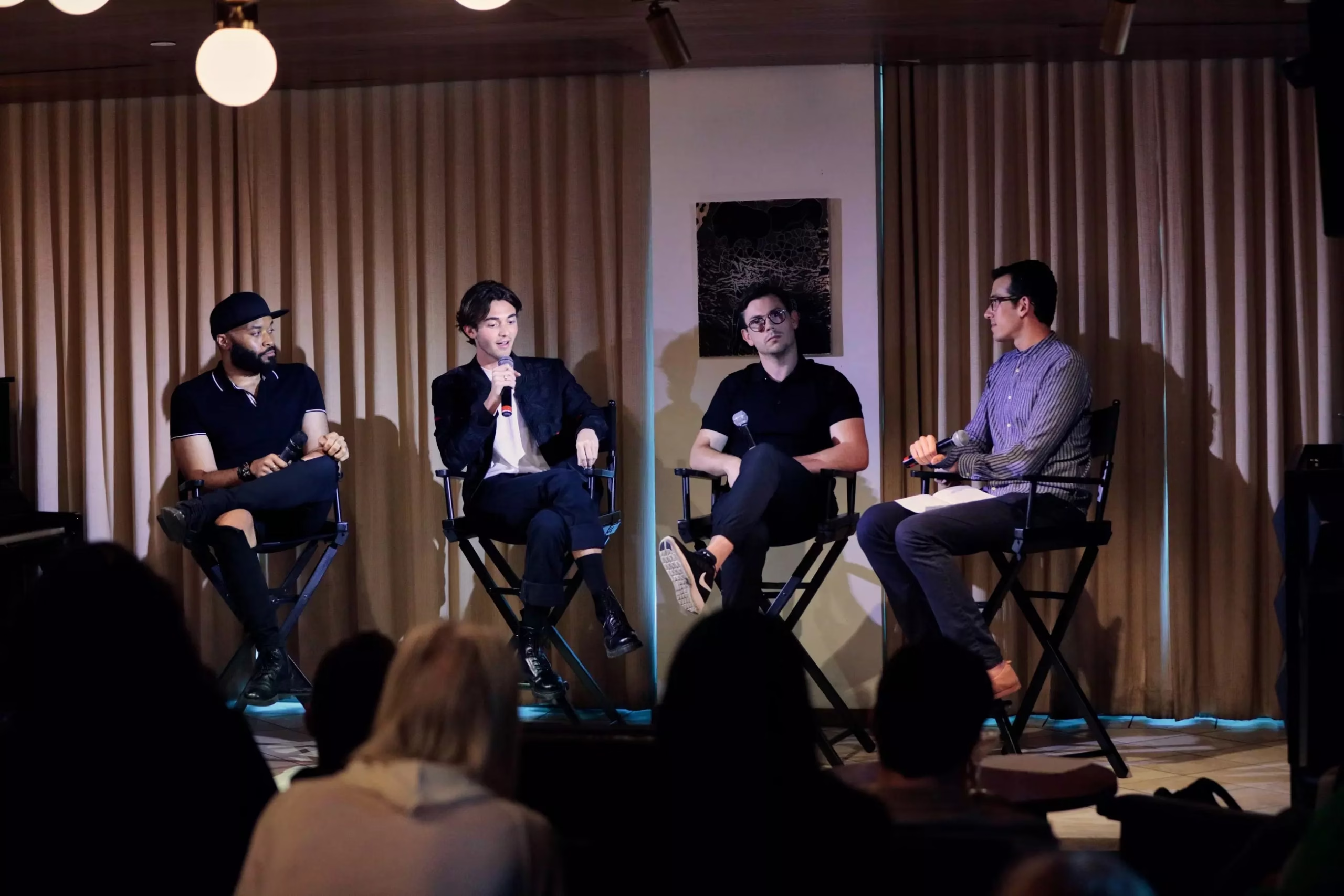
West Hollywood's creative members' club Soho House became the place where powerful conversations arose around LGBTQ+ identity, intersectionality, representation and action in the entertainment world, as Pride week in Los Angeles marked its second day of celebrations.
The Recording Academy hosted the Out In Entertainment panel on Tuesday, June 4, featuring singer/songwriter and pianist Greyson Chance, TV writer Ryan O'Connell and Recording Academy digital media editor-in-chief Justin Dwayne Joseph in conversation about what representation looks like today, the power of different narratives, authenticity, how to bring about change in the entertainment world and more. The panel, which also got into practical tips for artists in the field including navigating social media presence, was moderated by Brett Peters of the It Gets Better Project.
There Is No One Sole LGBTQ+ Experience
There is no one story that encompases the whole LGBTQ+ community was one of the strongest sentiments shared among panelists. In a world, like media entertainment, which can easily take one experience and make it universal due to a lack of representation, panelists discussed the importance of having diverse voices within the community itself. While there are people within the community that may feel seen thanks to progress that has been made in and out of the community, there are still others who don't .
"Being disabled and gay there's been not much out there," said O'Connell who is a writer for Netflix's "Special" based on his own life as a gay man with cerebral palsy.
He shared that being able to get to a place where he could talk about his disability has helped him through his own experience. "We live in this ableist society that doesn't consider my existence ... I now just love to talk about disability," he said. "The louder voice you have and the more honest you are, it really helps, it really moves the progress forward, so I'm really horny for my intersection."
For Joseph, it is important to acknowledge the intersectionality between race and sexuality in the work that he does as a digital media leader.
"I see color. I'm gonna be black and I'm also gonna be gay, so I think that has always been a part of the narrative,” he said. “I’ve always been cogniscent of that and also aware of how in the content that I'm doing, even if its not like gay adjacent, how am I honoring people that look like me? How am I honoring other black gay males, brown gay males? And speaking up for them. There's been a lot of spaces when it comes to music, a lot of those artists are not giving the platform.”
The Challenges Of Being An LGBTQ+ Artist In The Industry
While the music industry is becoming more welcoming, panelists agreed that work still needs to be done.
"I think that we're making mad strides as a music community,” Joseph said. “But if we're going under the hood and looking at the parts, some of them are faulty."
One of the challenges LGBTQ+ artists face is being pigeonholed because of their identity. "They get pushed into a niche category," Joseph said. "[They're] just a pop artist, not a gay pop artist, but a pop artist."
He continued: "I think there's still work that needs to be done, but I think there has been more opportunities to bring arists who just so happen to be a part of the LGBTQ+ community to come into spaces that are more mainstream."
<iframe width="620" height="349" src="https://www.youtube.com/embed/WrcN9m4tgFQ" frameborder="0" allow="accelerometer; autoplay; encrypted-media; gyroscope; picture-in-picture" allowfullscreen></iframe>
Growing up in the spotlight, Chance, didn't think about his sexuality much and wasn't thinking about what people would say when a video surfaced of him performing Lady Gaga's "Paparazzi" at arough the age 12. "I was waking up in the morning and my sexuality was the last thing I was thinking about," he said. Chance came out to his family first and would later come out to his followers on Instagram.
What Chance finds worrisome is how media project an identity to young LGBTQ+ artists, before they become aware of their sexual orientation/identity or when they decide they want to let the world know of it.
"I posted a video when I was very, very young, almost 10 years ago and went through this whole thing, I was signed to Interscope and we did everything touring and the whole nine yards, and I talk to team members now, and they share stories with me about how we would be at various press events and how people would come up to our team and say, 'When is the kid gonna come out? We would really love to know, we would love that release when it happens," he said. "It's interesting to hear these things because I was a kid and to know that people were thinking that, is a little messed up to me, it's a little not OK"
As an independent artist who is black and transgender, Neverending Nina, who shared her story from the audience, said that she doesn’t always feel safe in music or LGBTQ+ spaces.
"I'm a part of that marginalized community. I'm a singer/songwriter, I'm black, I'm also trans and so my navigation through the music industry as an independent artist, being in certain spaces is still quite different because you can still be in those spaces and still be subjected to producers coming on to you,” she said. “But you can't say anything because this is you're only shot and so I feel, as far as the people who have the power, those type of playing fields, is to actually think about creating those safe spaces for independent artists as well as as anybody contractual or not to be safe in those spaces as well as to explore their creativity without the onslot of worrying about, am I gonna get disrecpected, am i gonna get misgendered, am I going to get killed?"
She continued: “From my community, we are actually scared to even come to pride because even in that safe space ... there's levels of mysogony that gets put on transgender women, particularly black, transgender women.”
Creating Change
The panelists also shared ways that entertainment spaces could become more welcoming of LGBTQ+ artists and stories. As a performer, Chance aims for his shows to be safe and inclusive.
"I want to create a s fun and safe place for people to come to my shows where they feel like they can be comforable, something that I don't think a lot of us had gowing up of being able to know that you can safely got to a show and that there are other people in the community that you can interact with,” he said.
Joseph gave a shout out to a former editor of his, who not only gave him the space to represent his ideas when he was a writer but also valued his input, which isn't always the case with those in power. “A lot of times, people in my position, when you're the only person at the table, it can just be a check and nobody listens" he said.
RELATED: Brandon Stansell Takes Us To His "Hometown" In Special Pride Month Edition Of Press Play
When it comes to storytelling, often dominated by straight writers, O’Donnell feels like LGBTQ+ creatives need to be given the space to continue writing their stories without accomodating to straight people.
"I feel like with my show, I wasn't thinking about, 'oh, I wanna make sure that this reaches straight people and makes them feel ok,' no no no,” he said. “This is me as gay as possible and its gonna be written from a gay point of view and it's going to be starting gay men and its going to be for us, by us and I think that's really important because I think that in the world that I work in, in TV and film, I think that gay stories get made, but they're usually written by a straight guy or starring a straight actor and I feel like people are really horny and ready to profit off our pain without giving us any opportunites and i feel like just wanna make gay things for gay people, that's it. Period. And straight people can deal with it."
Working With Allies
The conversation also touched on having allies perform at Pride events, such as Ariana Grande's headline performance at Manchester Pride, has sparked conversation about whether a headlining artist at these events should be a member of the community.
Joseph said he didn't see Grande headlining as a negative. "I think that just goes against the pedigree of the legacy of music," he said. "I think the community as a whole, we've always graviatted towards allies, specifically women. The divas, just because they were who we could find a point of reference that were in the mainstream."
He added that artists who are allies can help bring attention to the LGBTQ+ community and their experiences. "An Ariana Grande fan will naturally lean into whatever she's doing," he said.
For O'Donnell, seeing someone from the community taking the headlining spot would be cool too. "I would love there to be an out gay pop star that has the same stature or reach as Ariana Grande," he said.
Being LGBTQ+ In The Age Of Social Media
In the entertainment world, social media can be a major way to connect with fans, other creatives and even a way to get your next entertainment opportunity, but panelists agreed on the importance of setting boundaries between their personal lives and the internet world.
It's a learning experience many of the panelists agreed and O'Donnell said boundaries are something he's learned as he's gotten older. "I didn't know what boundaries were, I thought they were like a myth," he said.
As professionals representing a brand, Jospeh pointed out its important to keep that in mind when tweeting or uploading a photo on Instagram.
"I can't be in my JJ Malibu on my Instagram because I have Editor-In-Chief of the GRAMMYs, so it's just about figuring out what aligns with how you're projecting yourself on social," he said.
Chance said it's okay not to have your whole life online. Although he came out through an Instagram post, he feels like its important to have some privacy. "I think right now, its very important for people with platforms to be advocating to their fans or people who are watching them that you don't always have to be so public. You don't always have to tell everything all the time," he said. "Cater to your own life and don't think because someone else is doing it, you have to as well."
Celebrate LA Pride With The Recording Academy & Special Guests
