
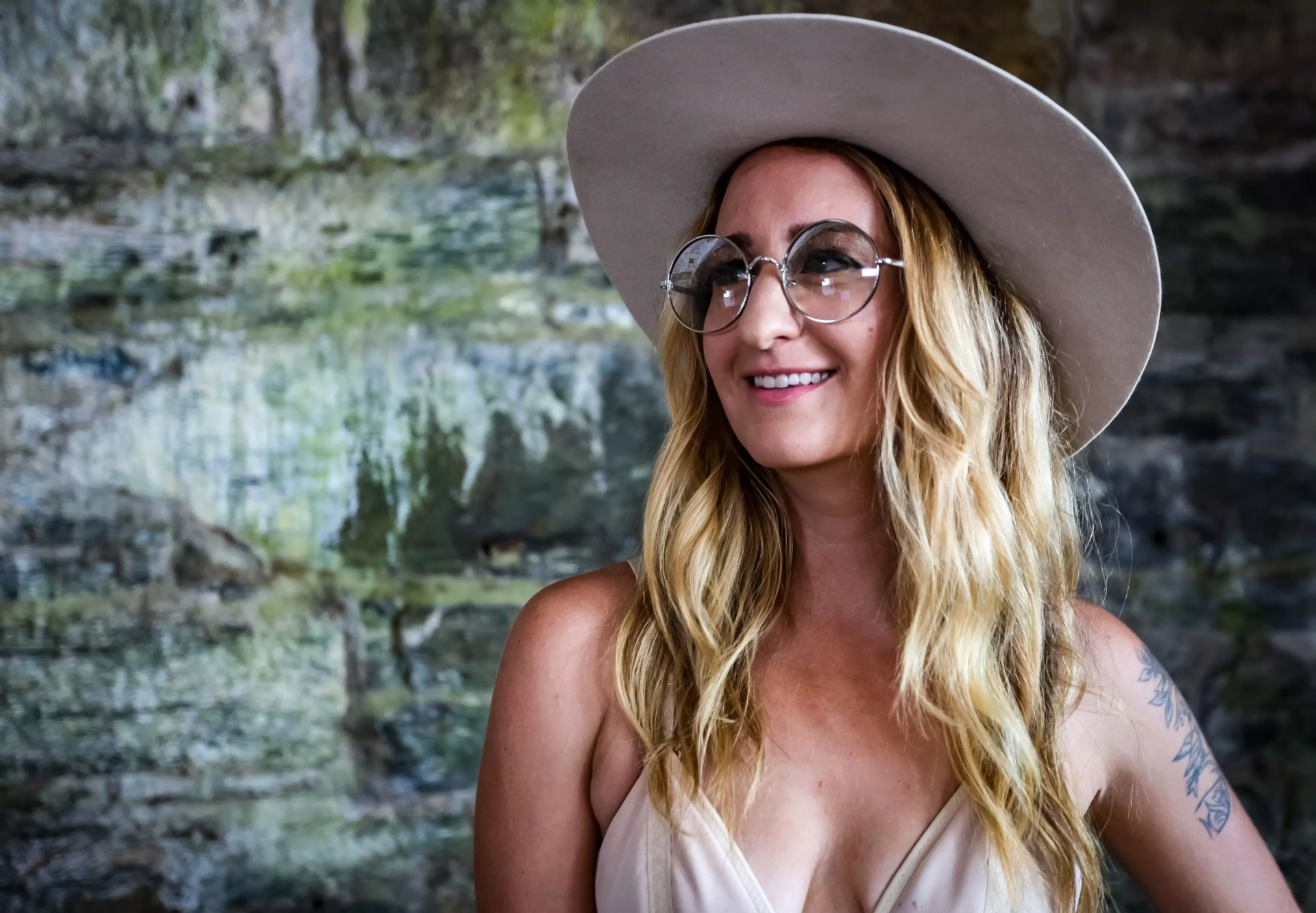
After a debut album as celebrated as 2016's Midwest Farmer's Daughter, no one would have blamed Margo Price for resting on her laurels. But the singer/songwriter did anything but, and the follow-up, 2017's All American Made, arrived like an arrow out of the sky, filled with bold statement songs about everything from the current political climate to women's rights and more. She may have delivered her gospel via traditional country music, but she didn't let a single genre fence in her fierce messages.
To learn more, we connected with Price backstage at Newport Folk Festival to discuss her sophomore album, the story behind "A Little Pain," her relationship with Jack White's Third Man Records, and more.
Coming out of the incredible success of Midwest Farmer's Daughter, how did the bold direction for All American Made take shape?
Prior to making Midwest Farmer's Daughter I had been playing with bands and writing songs for 13 years. I never have really been wrapped into one genre the way that I think people identified me with country music when that album came out. But really, with All American Made, I wanted to be able to go back to writing in any style that I wanted. If I felt like something should have more of a soul groove to it, like "A Little Pain," we just did that. Or if I wanted to write a seven-verse folk song about the decline of our country, [I] also felt free to do that. There's always a stigma when anybody writes something that is political. For some reason, when it's a woman saying it, it can intimidate people so I was a little nervous of the reception and what folks would think. But I think that because of the state that our country's in right now it really resonated with a lot of folks.
<iframe width="620" height="349" src="https://www.youtube.com/embed/3W4-6R54xdg" frameborder="0" allow="autoplay; encrypted-media" allowfullscreen></iframe>
Do you remember writing "A Little Pain"? Where did that song come from?
It was before we started traveling in a tour bus and we were just on the road in a van and sprinters and pulling a trailer. I was in the very backseat, been laying down and sleeping because it's hard to get rest when you're waking up really early and driving. So I just wrote it down and it was one of those things that came out [in] 20 minutes or less. I wrote it and I knew in my head what the melody was. When we got to the venue, I picked up the guitar and I put the two together. When I first wrote it, it was in a waltz tempo. It was like the Johnny Cash song "Busted." Then it just developed with the band into a thing where I put down my guitar and just sing it and enjoy that.
How about "Weakness"?
It started out as a poem, actually. I was feeling very bipolar one day, as one will, and I just had a whole list. ... Sometimes I'm Virginia Wolfe, sometimes I'm James Dean. It just kept going like that and my husband was going through my notebook and he found it and he was like, "There's a lot of really great bits in here." So he took those things and then he started writing it and then we finished it together. It's about the two sides to every human. It's the side that you show the world and then the side that maybe only your family knows or maybe only you know. There's darkness there.
<iframe width="620" height="349" src="https://www.youtube.com/embed/WdIeK6XpxRk" frameborder="0" allow="autoplay; encrypted-media" allowfullscreen></iframe>
Yes, it's empowering for a lot of people when they hear it — and humanizing.
I'm not perfect. I certainly have emotions that fly off the handle, but that's why we're here — to feel things, love and pain and everything else.
Absolutely. Coming out of the time in you career where you were writing in all those different styles, why was Third Man Records the right fit for you?
The amazing thing about Third Man is that they have let me be myself. They haven't tried to change me in any way. They're completely open to my ideas and ... prior to signing with them I had met with a couple major labels and I'd talked with some other indie labels and everybody wanted to change the record and change who I was, really. So it was refreshing to go to work with them and they're just like, "Anything you want. We back you up."
<iframe allow="autoplay *; encrypted-media *;" frameborder="0" height="450" sandbox="allow-forms allow-popups allow-same-origin allow-scripts allow-top-navigation-by-user-activation" src="https://embed.music.apple.com/us/album/all-american-made/1277953842?app=music" width="660"></iframe>
Nice. What are you working on now? What's next for you?
I'm gonna start recording my third full-length record this fall/winter. Already been talking to a producer, but I'm not telling anybody who, what or where. But it's gonna be a change of direction from the country world and I'm looking forward to it.
Last question: Bob Dylan went "electric" here at Newport 53 years ago now. What do you think fans will remember about this time period now in 50 years or so?
When I was onstage I touched for just a moment about women's rights and being able to let women headline a festival, having the equal playing field that men have. That, for me, is really important. That's why I wrote "Pay Gap," and I would like things to be fair and even. We thought we had that moment in the '60s and '70s — everyone was burning bras. At least we got women out of the kitchen, out of the household, working jobs, but there's still a lot of work to be done and I want to help.
