
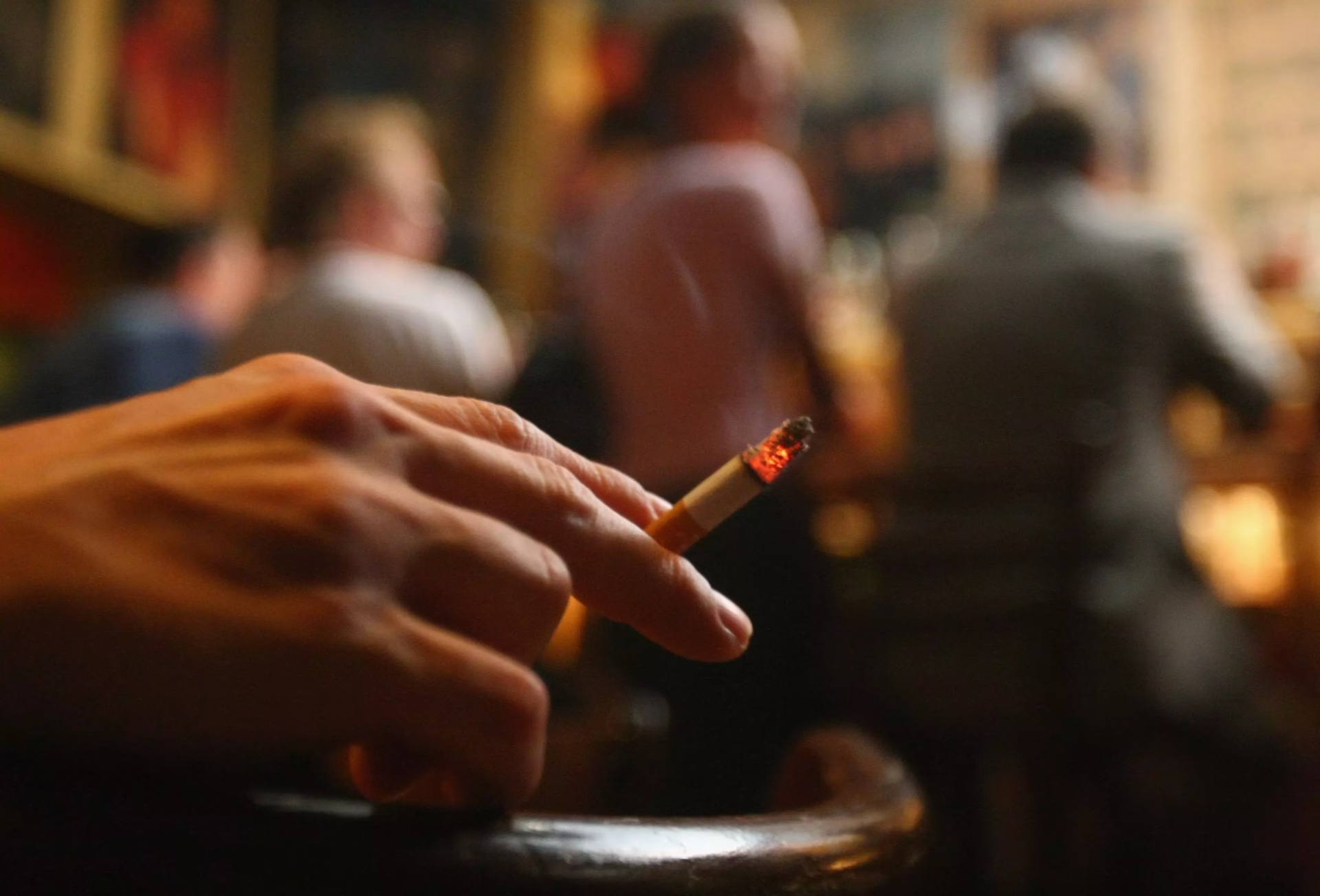
For many kinds of workers, secondhand smoke might be a hazard in the workplace. But for musicians, substantial exposure to secondhand smoke can happen at any venue or public space they are performing in that allows smoking.
Across the country, artists and musicians who work or perform in bars, casinos and other venues that are not completely smoke-free are vulnerable. Studies show that musicians in nightclub environments may be exposed to a higher concentration of secondhand tobacco smoke than some other occupational groups.
<blockquote class="twitter-tweet" data-lang="en"><p lang="en" dir="ltr">How do pro singers take care of their voice? Here's 10 vocal tips from <a href="https://twitter.com/lalahhathaway?ref_src=twsrc%5Etfw">@lalahhathaway</a>, <a href="https://twitter.com/HamiltonAnthony?ref_src=twsrc%5Etfw">@HamiltonAnthony</a> and other experts: <a href="https://t.co/NLxGLsCSPz">https://t.co/NLxGLsCSPz</a> <a href="https://t.co/UJ043HrzRx">pic.twitter.com/UJ043HrzRx</a></p>— MusiCares (@MusiCares) <a href="https://twitter.com/MusiCares/status/1027226180519448576?ref_src=twsrc%5Etfw">August 8, 2018</a></blockquote>
<script async src="https://platform.twitter.com/widgets.js" charset="utf-8"></script>
Secondhand smoke contributes to the deaths of roughly 41,000 adults who don’t smoke and 400 infants each year, according to the Centers For Disease Control And Prevention (CDC). In terms of illness, secondhand smoke causes lung cancer, stroke and coronary heart disease in adults. According to the U.S. Department of Health And Human Services, employees are 20-30 percent more likely to get lung cancer if they are exposed to secondhand smoke in the workplace.
Breathing in secondhand smoke has immediate effects too, even if only exposed during a short period of time. These effects include eye irritation, headaches, nausea, breathing difficulties and asthma attacks.
Musicians who perform for even a few minutes or up to several hours become especially vulnerable to all effects. For many of them the choice comes down to working or not.
In 2002, an Allegro article documenting New York City's fight to get smoke free in restaurants, bars, nightclubs and other workspaces described how secondhand smoke effects musicians:
"One of the points musicians made was that when playing an instrument, particularly in the horn section, a musician is required to breathe in additional oxygen. And all musicians physically exert themselves during a performance. This exertion increases their breathing rate and increases their exposure to secondhand smoke."
More recently in Oklahoma, local musicians rallied together with Free The Night to share the ways smoking affects them on stage. "It's just difficult sometimes to be performing for 30, 45 to an hour sometimes whenever you have to fight through cigarette smoke," said hip hop artist Jabee.
Music duo, Desi and Cody, have several reasons why they want to perform in a smoke-free environment. "We can't perform very many nights in a row in a smoke full environment because we lose our voices," said Cody
"It's instant doom for me," Desi added. "I'm like 'Oh, great' I'm going to get a sinus infection and I'm, going to have to be on antibiotics."
So, if it's clear how badly smoke hurts musicians and entertainers, why won't anyone do something about it at places that still allow smoking? One of the biggest arguments is it would bring down business. But that’s not true according to Gallup, a research-based consulting company. Their 2005 survey concluded that a majority of Americans favor smoke-free places. Additional research from American Cancer Society shows that business is not negatively affected by smoke-free bars and restaurants.
The CDC says separating smokers and non-smokers won't stop people from breathing secondhand smoke. Opening windows or using air filters won't help either.
A smoke-free environment that is healthy for everyone can happen. Major cities like Austin, Texas Branson, Mo., Chicago, Los Angeles, New Orleans, New York City that are smoke-free cities and also major music hubs, are examples of thriving economies.
