
There are generally two kinds of people in this world: Those who love holiday music and those who can't stand it. Regardless of which side of the fence you stand, it turns out science has an explanation.
<iframe width="620" height="349" src="https://www.youtube.com/embed/yXQViqx6GMY" frameborder="0" allowfullscreen></iframe>
Scientists tell NBC News it all comes down to your childhood association with holiday music.
"Our response to Christmas songs depends on the association," said Dr. Rhonda Freeman, a clinical neuropsychologist. "Many of us associate this music with childhood and a happy time of presents and traditions and all the specialness that happens around that time of year."
However, on the other side, those who had a difficult childhood or who associate the season with loss find that holiday music brings on more painful associations.
The reason these childhood holiday music impressions have so much power over us even as adults is thatthe prefrontal cortex area of the brain, the rational thinking part of the brain, is still developing in children. As a result, a child's brain is more emotional, and those emotional associations around music stick well past adolescence.
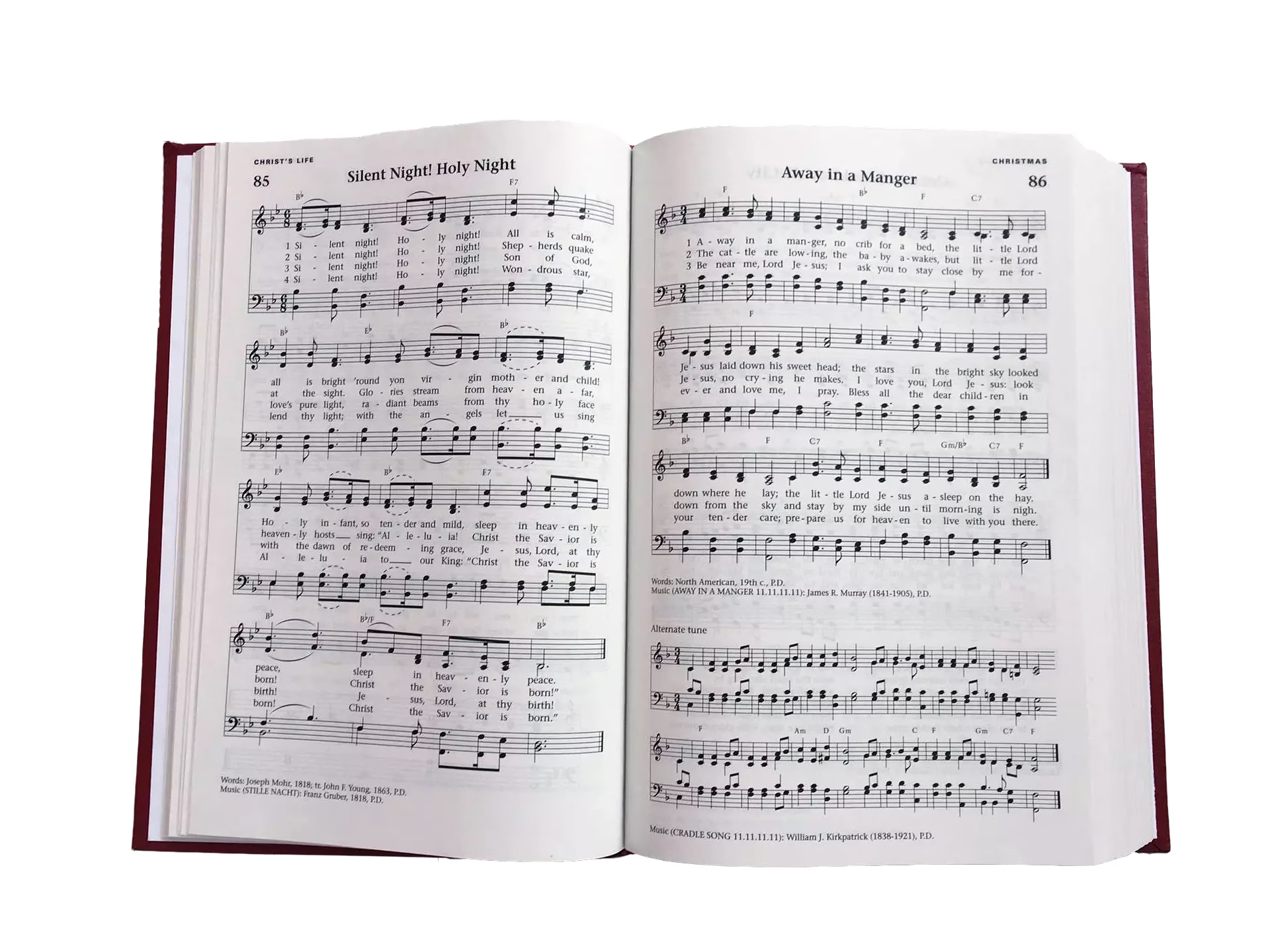
Because we listen to the same body of holiday music year after year since the time we are small, and tunes like "Silent Night" or "Carol Of The Bells" are designed to elicit an emotional response, it makes complete sense it's hard to get these songs out of our heads and hearts.
So love them or hate them, know you're not alone in your holiday music feels.
