
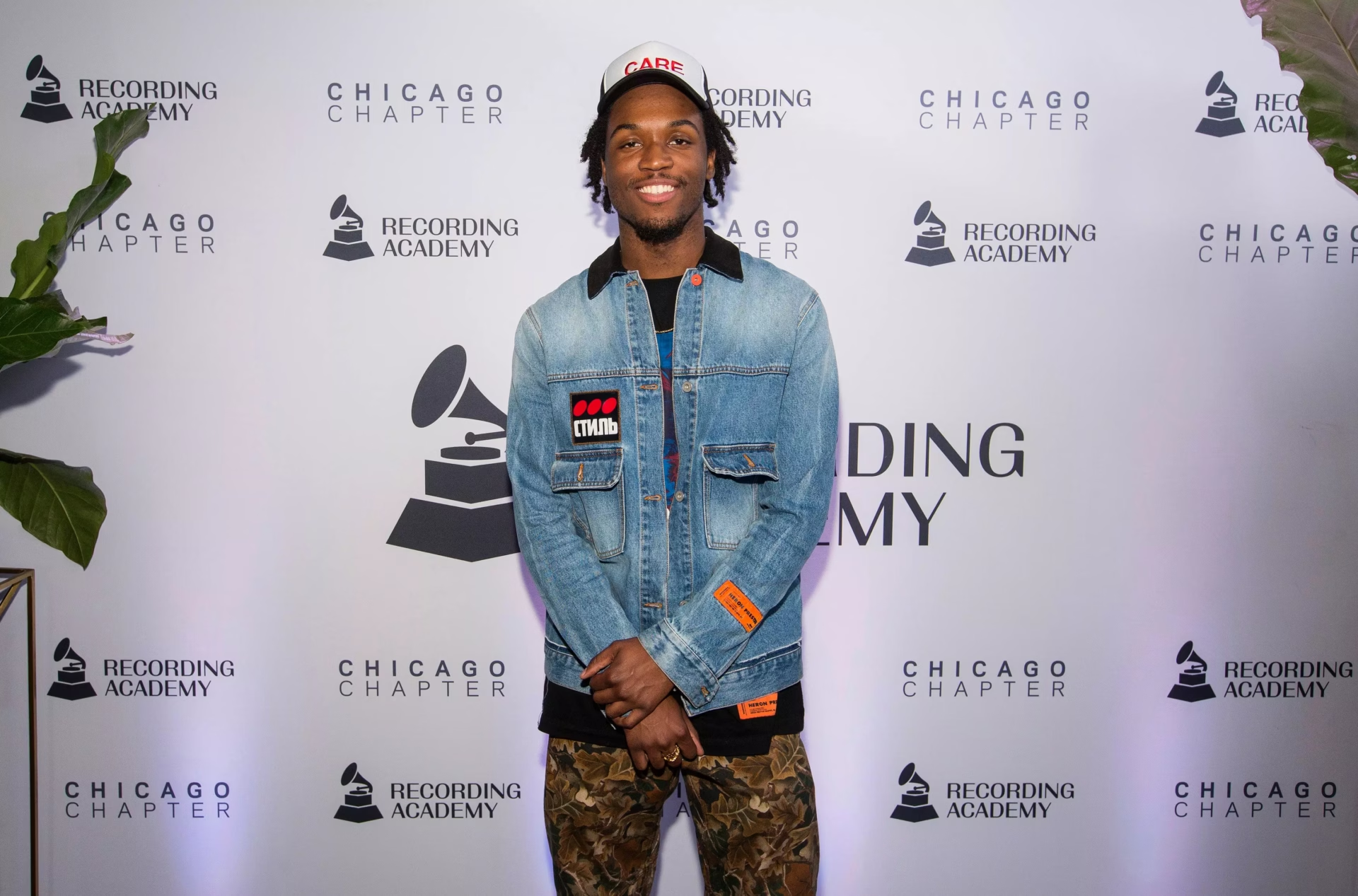
While the ascension of streaming transformed the music consumption landscape, artists didn’t immediately have the means to adapt to that change. The debate throughout the industry over best payment practices continues; each technological advance necessitates new strategies for financial success for independent artists. Chicago rapper Saba (also known as Tahj Malik Chandler) is a success story in that resolution, carving a path to viability in the streaming present.
Saba sat down with the Recording Academy Chicago Chapter for an event called “How to Break Through: Turning Digital Streams into Rivers of Revenue” to discuss how independent artists across can do the same. Held at the Virgin Hotel on July 29, the event also featured Saba’s manager Cristela Rodriguez and was moderated by VSOP owner and head engineer Matt Hennessey.
Matt Hennessey, SABA and Cristela Rodriguez
Photo: Barry Brecheisen/WireImage
While a couple of mixtapes and guest spots on tracks like Chance the Rapper’s “Angels” cemented Saba as a rising star in the city’s vibrant hip-hop scene, his 2016 debut Bucket List Project showed a more auteurist view. The West Side native paired that careful consideration with a clear statement of activism last year; 2018’s Care For Me was dedicated to John Walt, a fellow member of the Pivot Gang and Saba’s cousin, who was fatally stabbed in 2017. In addition, he helped establish the John Walt Foundation to foster the arts for Chicago youth.
With that duality of local connection and global intentions in mind, here are four key takeaways from the passionate, fascinating discussion.
Invest In The Future You Invent
As may be evident from his involvement in the John Walt Foundation, Saba’s a big believer in the power of music education. He had access to the creative minds at a young age and has since driven a successful career of his own, so it’s hard to argue with the importance of creating that connection early. “My father is an R&B artist, my uncle made beats, and my grandfather was a funk musician,” he explained. “I went into the studio with my dad early on, and that was inspiring.”
Gear and technology can be essential to building a foundation that can lead to success. However, the disparity in resources between high- and low-income communities is severe enough when it comes to traditional education, let alone music. “Adults steer kids away from equipment because that stuff is expensive, but I touched stuff I had no business touching, and now here we are,” Saba said. “Once we had the access, things got serious.”
<iframe width="620" height="349" src="https://www.youtube.com/embed/A6F2OrOjexs" frameborder="0" allow="accelerometer; autoplay; encrypted-media; gyroscope; picture-in-picture" allowfullscreen></iframe>
Buld From Inspiring Friendships And Family
Chemistry and mutual respect are essential for a successful working relationship. And while the corporate world hires HR managers to produce that environment, the music industry demands more flexibility to build your own team from the ground up. That’s certainly the case when it comes to Pivot Gang; the group was founded in 2012 by Saba, his brother Joseph Chilliams, their cousin John Walt, and their close friend MFnMelo.
<blockquote class="twitter-tweet"><p lang="en" dir="ltr">WHO WANT A PIVOT TOUR??? <a href="https://t.co/2CsUz3gq08">pic.twitter.com/2CsUz3gq08</a></p>— SABA (@sabaPIVOT) <a href="https://twitter.com/sabaPIVOT/status/1158839952429465607?ref_src=twsrc%5Etfw">August 6, 2019</a></blockquote> <script async src="https://platform.twitter.com/widgets.js" charset="utf-8"></script>
They learned quickly that one of the keys to working with family and friends is that they’ll call you out. “If Joe didn’t like the music we were making, he’d just say, ‘That sh*t is whack!’” Saba laughed. “You need to keep those people around you.”
Young Chicago Authors became another kind of family for Saba—and many other prominent Chicago rappers. At about 16 years old, fellow Pivot Gang member Frsh Waters convinced Saba to get out of his shell and start making more connections. “It’s hard to be a rap star and be shy,” he said. “I don’t share this often, but I learned I needed to have a plan: How can I insert myself and offer what I had?”
Frsh ensured he’d be able to showcase his skills. Saba became friends with people who inspired him: “Noname is the greatest rapper in the world,” Saba noted. “She’s such a rare unicorn of a person.”
By being able to offer his access to music equipment to others, Saba was able to build a deeper network. He began recording Noname and Vic Mensa, and making connections with Chance the Rapper and Mick Jenkins. “All these people knew that I rapped, and I knew that they needed a place to record,” he said. “This was my way of investing in my art and the art of others early on.”
Photo: Barry Brecheisen/WireImage
Find Your Finesse Locally And Expand
“I was king of finesse. If I wanted something to happen I just figured it out,” he says. While he attended college, Saba earned coverage on more and larger sites, booked more gigs, and generally spread word of mouth. At the same time, he admittedly wasn’t always able to see the forest for the trees. But after an out-of-the-blue text from Chance the Rapper, Saba found himself guesting on Acid Rap highlight “Everybody’s Something”. While his own mixtape had been good for getting over locally, this was the start of a new level. “I knew I needed to get some followers before ComfortZone came out,” he said. “I searched ‘SABA’ every day on Twitter and favorited everything anyone said. I was king of finesse.”
Trust The Experts But Rely On Your Foundation
Though an independent artist may need to be a jack of all trades, finding a master in a specific area makes a real difference. In fact, relinquishing control to professionals and experts can allow you to focus on your own strengths. After keeping it in-house on his first recordings, Saba brought in Papi Beatz to mix and master ComfortZone. Next came management and PR. “That experience was a test run and it took convincing to give up some control,” Saba said. “You need people to collaboratively make decisions with.”
<blockquote class="twitter-tweet"><p lang="en" dir="ltr">HAPPY BIRTHDAY TO A CLASSIC. COMFORTZONE TURNED 5 TODAY. WOW. <a href="https://t.co/AVFVy66kFU">pic.twitter.com/AVFVy66kFU</a></p>— SABA (@sabaPIVOT) <a href="https://twitter.com/sabaPIVOT/status/1150941626237378561?ref_src=twsrc%5Etfw">July 16, 2019</a></blockquote> <script async src="https://platform.twitter.com/widgets.js" charset="utf-8"></script>
Saba met his current manager, Cristela Rodriguez, when she was working at a venue in Oakland. At the time, tour shows might be sparsely attended—the Oakland show particularly so. “There were seven people in the crowd at one of the shows because I had seven roommates,” Rodriguez laughed. But once she officially joined the team, Saba immediately felt Rodriguez’s influence. “Cristela took care of us and made sure everything was straight,” he said. “Work with someone who knows what they are doing.”
While younger artists may look for a manager with name recognition and apparent clout, Rodriguez argues the importance of building a foundation from the ground up. “That is key: start small,” Saba concurred. “When you’re in the trenches with someone at your lowest point, you form a bond. Struggling together is a big part of growth.”
Another bit of important expertise came when Saba’s PR representative, Rory Webb, insisted that he diversify the way his fans could reach the music. “I wanted to stick to Soundcloud, and had to be convinced to use Apple and Spotify—I was worried spreading out would make follower counts look lower,” Saba explained. “But in the end I trusted Rory.” When Saba dropped his debut album, 2016’s Bucket List Project, the reception was notably different. “I had banners and playlist placements. It looked like I was official and signed to a big label,” he said.
How Queer Rappers Are Defining The Next Generation Of Chicago Hip-Hop
