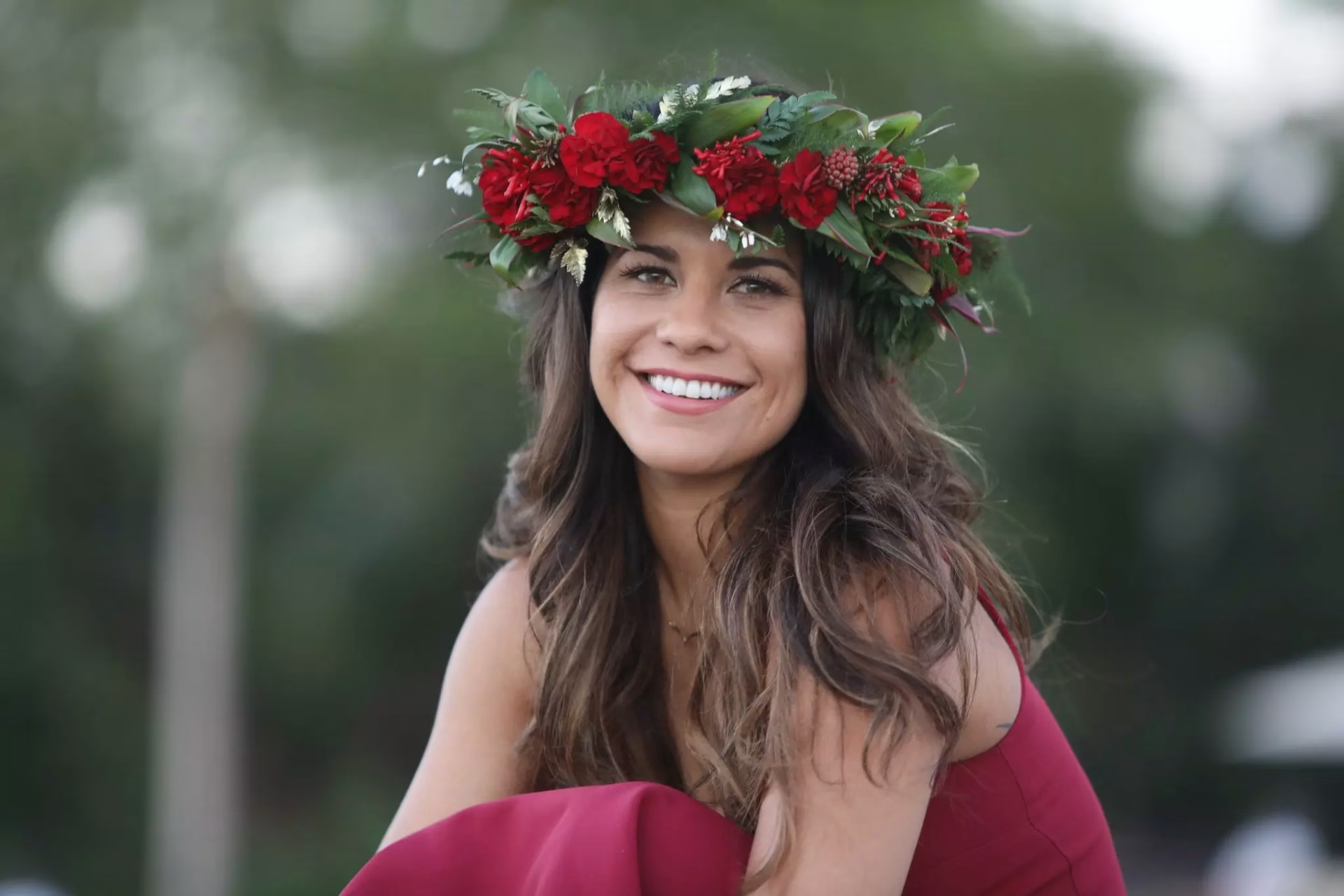
In a brand-new editorial series, the Recording Academy has asked its Membership to reflect on their career journeys, the current state of the music industry and what we can do to collectively and positively move forward in the current social climate. Below, GRAMMY-nominated Hawaiian singer/songwriter Kimié Miner shares her open letter with GRAMMY.com readers.
The truest voice of any artist comes from deep within our naʻau, or intuition led by the whispers of our ancestors. As a Native Hawaiian and custodian of our culture, this is a sacredly held belief, kept alive by ʻike, or knowledge, and moʻolelo, or storytelling. An artist's journey often starts long before their audible voice is ever heard.
I know my voice, my storytelling, my mele, comes from a legacy so much greater than mine. I sing as one, but I echo 10,000 voices that came before me. As a singer-songwriter who has evolved as a producer, director, advocate, and executive creative catalyst, I have become all the more aware of the significance of identifying an intention for each new song. It can start as a thought, idea or rift, but becomes a clear vision that carries a message and transforms into a mele, or song, that listeners can identify with.
I smile, knowing that they are not only identifying with my voice but those before me. We are all connected.
<style>.embed-container { position: relative; padding-bottom: 56.25%; height: 0; overflow: hidden; max-width: 100%; } .embed-container iframe, .embed-container object, .embed-container embed { position: absolute; top: 0; left: 0; width: 100%; height: 100%; }</style><div class='embed-container'><iframe src='https://www.youtube.com/embed//aMNO9G-OoWI' frameborder='0' allowfullscreen></iframe></div>
2020 began with dreams coming true at the 62nd GRAMMY Awards for our Hawaiian Lullaby nomination. The year forecasted to be rich with brand growth, new inspirations, new collaborations and partnerships, new audiences and venues—ultimately, new beginnings. And it delivered just that, just not in the way I, or our industry, could have ever anticipated.
And with the birth of 2021, my new child, new albums and collaborations, never before has music been this essential to humanity's livelihood and connectivity. Never before have artists had to adapt in this way. I believe we are stronger and more resilient because of what this pandemic has cost each of us. It's been relentless, and now so are we.
Artists were given a choice in this season of cancellations: cancel our voices and projects or find a new one and give unprecedented access to our personal worlds and homes. I chose to open up—and open wide—with the launch of "Mele in Hawai'i." It's the longest-running livestream entertainment series in Hawaiʻi since the pandemic began, supporting more than 50 artists worldwide, all with Hawaiʻi roots.
Learning new technologies, stripping away facades and perfection, I called upon my Haku Collective colleagues and peers to create virtual escapes of song and conversation. These created a new sense of togetherness anchored in authenticity and humanity; while finding ways to help artists and small businesses stay afloat amid an economic collapse.
As a mother learning how to provide for my children amid a pandemic, to protect my home, and perpetuate my song was not easy. It was effin' hard! (Just check out my mama bird blog to learn how I get s**t done with three under three!).
2020 promised to be the year of growth, and here we are in 2021, transformed by adversity—countless "Mele in Hawai'i" episodes, a new children's album and numerous new partnerships and collections. We learn how to be fluid in all the transitions, the high and low notes of life. 2020 had a voice, too—one that spoke to each of our beliefs, fears, habits, plans and dreams—and those of us who were listening learned how to sing along.
While so much remains uncertain, I know my voice has powerful certainty to create a space for new artists to be nurtured. That is what I hope to do for the next generation of music makers managed by Haku Collective, a company I started by artists for artists. I believe it is part of my kūleana, or responsibility, as a Native Hawaiian artist.
First, I want always to awaken their most authentic moʻolelo (or stories). Then, I want to mentor and share their unique voice, giving them access to the best collaborations to steward their message. And as a result of this global pandemic, I want all of us to sharpen our talents with the skills of innovation, technology and undeniable authenticity no matter where we are.
People often ask me why I use a rainbow as my symbolic visual, and it's very simple. It represents a promise, a hope. It is a ho'ailona (symbol) that, after the storms, that there is something to look forward to. It is a reminder to look ahead and reminds me of my commitment to my community, my fans, and the Hawaiian music industry.
Our people have always been resilient innovators. We are the way-finders of a new generation, and yet our songs carry the echo of those before us—our ancestors.
With Aloha, from the bottom of a rainbow—and remember, it always arches higher!
Roots Musician Amythyst Kiah: From An Awkward Hobbyist To A GRAMMY-Nominated Professional