
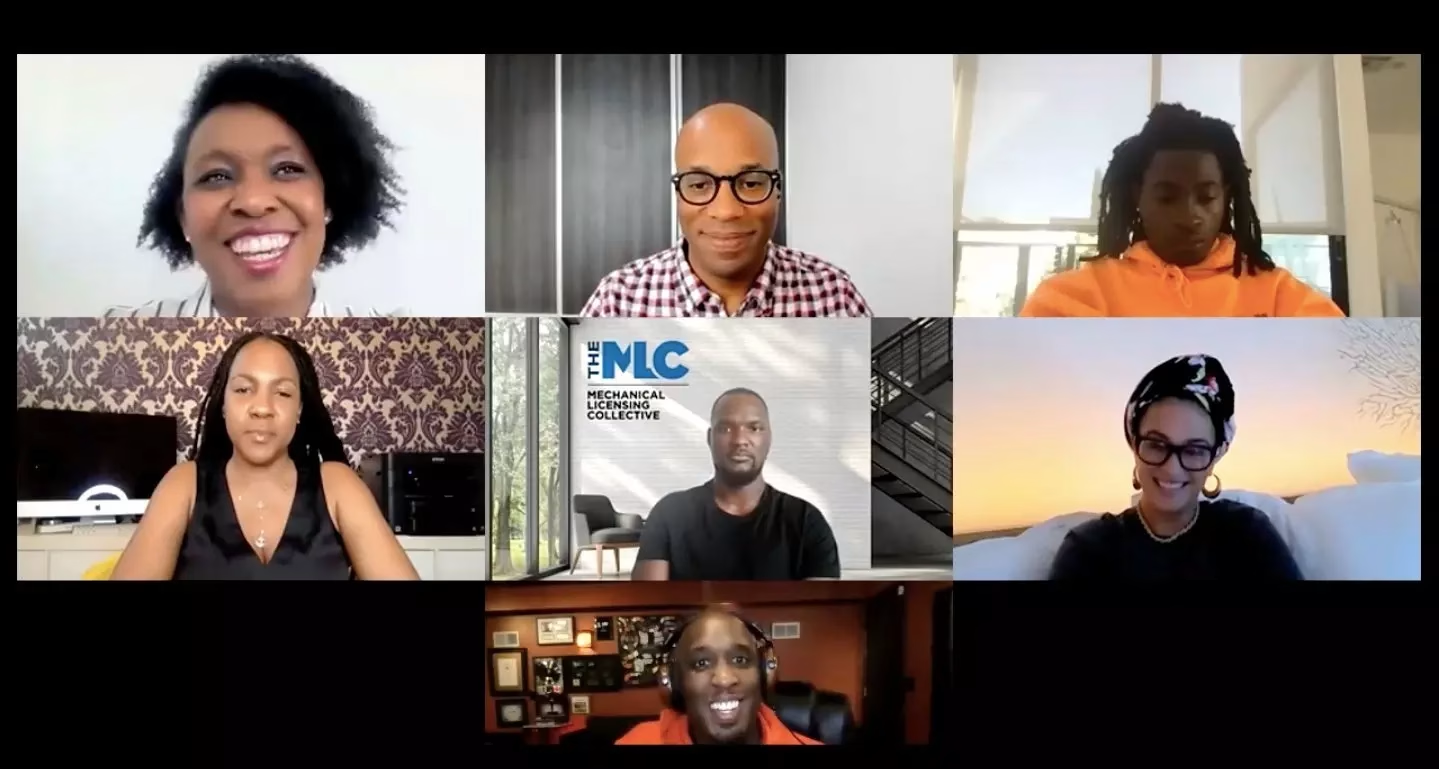
On June 2, the Recording Academy's Los Angeles Chapter presented another edition of their Care For The Culture series, designed to bring rap, reggae and R&B artists together for a conversation about their needs as artists. In the latest edition, business and financial management experts in the music business shared their knowledge on how artists can maintain financial stability. Financial literacy is key to thriving economically, but research shows many young adults lack the skills, and it's communities of color that lack this kind of knowledge the most. As WGBH reports, the wealth gap for people of color compared to whites is growing every year.
Financial wellness is more than accruing money, it's about having the insight and tools needed to know how to invest, budget and build generational wealth. Panelist and CEO/Founder of Goalsetter, Tanya Van Court really summed up the importance of financial wellness. "Financial health for 2021 is all about mental health around money and how we think about money," she said. "It's about shifting the conversation. If 2020 and 2021 hasn't done anything else for us, what they should have done for us is help us to realize is that we have to shift our mentality in so many ways in order to survive, thrive."
The panels, moderated by Qiana Conley, Executive Director of the Recording Academy Los Angeles Chapter and Jonathan Azu, Founder of Culture Collective, provided knowledge for anyone looking for more insight on how to become more financially savvy.
Here are five points we gleaned from this year's Care For The Culture panel.
<style>.embed-container { position: relative; padding-bottom: 56.25%; height: 0; overflow: hidden; max-width: 100%; } .embed-container iframe, .embed-container object, .embed-container embed { position: absolute; top: 0; left: 0; width: 100%; height: 100%; }</style><div class='embed-container'><iframe src='https://www.facebook.com/plugins/video.php?height=314&href=https%3A%2F%2Fwww.facebook.com%2FRecordingAcademy%2Fvideos%2F3782513528545018%2F&show_text=true&width=560&t=0' width='560' height='429' style='border:none;overflow:hidden' scrolling='no' frameborder='0' allowfullscreen='true' allow='autoplay; clipboard-write; encrypted-media; picture-in-picture; web-share' allowFullScreen='true'></iframe></div>
Expand Your Horizons
The first panel opened with an insightful discussion on the importance of having multiple forms of revenue. The panel, Identifying Income Streams and Tips For Rights Management, included Justice Baiden, Co-Founder and Head of A&R for LVRN; Kaisha Blackstone, Co-Founder/CFO for BASSic Black Entertainment, LLC; Dae Bogan, Head of Third-Party Partnerships for The Mechanical Licensing Collective; Orly Marley, President of Tuffgong Worldwide; and Derek Minor, Artist/Producer and Owner of Reflection Music Group.
Artists in the industry should ask themselves two questions when it comes to their income: "Where is my money coming from?" and "How can I start earning money outside of publishing and distribution?"
Since royalties can often be unstable sources of income, Minor noted, it is important for artists to earn money beyond traditional outlets like publishing and distribution. "A lot of times with royalties it feels like you're chasing coins that are rolling down the street," he said.
So, how does an artist expand their wallet to secure funds in addition to royalties? Baiden suggested artists make a list of all their hobbies that can become extensions of their brand. As an example, he cited Rihanna and her FENTY beauty line. "She's not going to give y'all another album because she's put herself into a position where she is a brand and she's creating brands that are under the major umbrella," he said.
If that isn't compelling enough, the industry's evolution may be. We're living in a different era where none of us are confined by geographical borders anymore – which is all the more reason to expand your prowess outside of the music portion of the business. "Musicians have to look at their competition as being a lot larger," Blackstone said. "With things being virtual and more produced online, you're now competing with everyone across the country. Everyone is literally just an internet connection away."
Educate Yourself In Business And Finance
Screenshot from Care For The Culture 2021 | Screenshot: The Recording Academy
On top of having multiple forms of income, Minor suggested artists become knowledgeable on finance. "I encourage artists that are out there to get educated with finance. Even within our music business, there's an ecosystem of how you get paid," he said.
Echoing Minor's sentiments, Baiden said the key is to get on the offense, not defense of finances. "Don't wait until you get a royalty check and/or the label to give you an advance. That's no man's land," he said.
And what about all this industry chatter about NFTs? "NFTs can be an income stream for a very small percentage or creators who have the type of superfans that not only see that piece of content as valuable in some sense, but also have the disposable income to make the transaction that would make sense for this to be an income stream in the first place," Bogan said. He recommended artists survey who's actually making money off of NFTs currently by considering who is purchasing.
Think Outside The Box With Brand Partnerships
Today, brand partnerships can be organic ways to make extra income. If an artist is already using a brand's services or products organically in their daily world, it's worth some effort to partner with such companies. Marley believes it's important to be ready for these partnerships, even if they haven't been locked down yet: "If you stay ready, you don't have to get ready." Companies want to see who you are, and they want to see a presentation. So, Marley recommended having a PowerPoint comprised of artist highlights and stats.
Much of Marley's advice came from first-hand experience. She had the privilege of helping with the Got Milk? radio campaign featuring Ray Charles singing and playing the piano. (Charles received ownership of the master recording in the commercial.) From that experience she learned a vital point that all artists should remember: "Always look at yourself as a brand. Think of yourself as Ray Charles. Think of yourself as somebody who is leaving a legacy behind."
Budget & Plan For The Unexpected
Screenshot from Care For The Culture 2021 | Screenshot: The Recording Academy
The second panel, Creating a Legacy - Financial Literacy and Generational Wealth dove right into all things finance. It featured entertainment and financial experts Heather Beverly, Esq., Entertainment Attorney and Founder/CEO of Soul Reciprocity Network, LLC; Robert Polay, CPA/Founder Partner of Polay + Clark; Octavius T. (Ted) Reid, III, Senior Investment Management Consultant/Sports & Entertainment Director at Morgan Stanley; and Tanya Van Court, CEO and Founder of Goalsetter.
"Year one is where most people get into trouble," Polay stated. As a new artist on the scene, it's easy to throw all caution to the wind when the first checks start rolling in. However, this is where discretion is needed the most. As Beverly said, "Habits begin from day one." So, it behooves artists to figure out their fixed costs from the start. The COVID-19 should have underscored the financial and budgeting essential for everyone, Polay mentioned. He added: "It's very difficult to forecast your future when there's phenomena involved. Really, every album cycle should be treated like it's your last album cycle, which is very difficult when you're in the starlight and everyone's telling you how awesome you are."
To save money, Reid recommended at least 10 percent going into savings; cutting off the extra coffee at Starbucks could help if an artist doesn't make enough income. It's all about starting small. "Every three months you adjust that number until you get to 10 percent," he added. For artists, he stated that percentage should be a lot higher for artists because of the volatility in income. For that reasons, it is important to work out a budget and then deciphering needs from wants.
Invest In Your Future As A Business, Not Just An Artist
Artists have to get into the mindset of why the industry is called a "music business." One thing that Beverly likes to tell her clients is to think of themselves as a business. You're not only the brand, but you create the assets. She's had clients that even after many years of success don't understand where funds come from and how they should protect it.
Van Court mentioned that everyone should have a main hustle and a side hustle, "because if you don't make enough money in your main work to save or invest, there's no shame in driving an Uber or Lyft so you can have enough money to save for an emergency fund." She added: "2021 has to be all about [forgetting] what everybody's told you about save, share, spend. That's not going to make you wealthy. It's save, share, spend, and invest. We have to ditch this consumer mindset that is making us poor and everybody else rich."
Polay added: "Freedom equals time plus money to enjoy it. You can have all the money, but you have no time or anyone to share that with or to enjoy the fruits of your labor, that's not wealth. Wealth is the choice to work and to have the time and the money and people you share that with and to know yourself and what makes you happy."
