
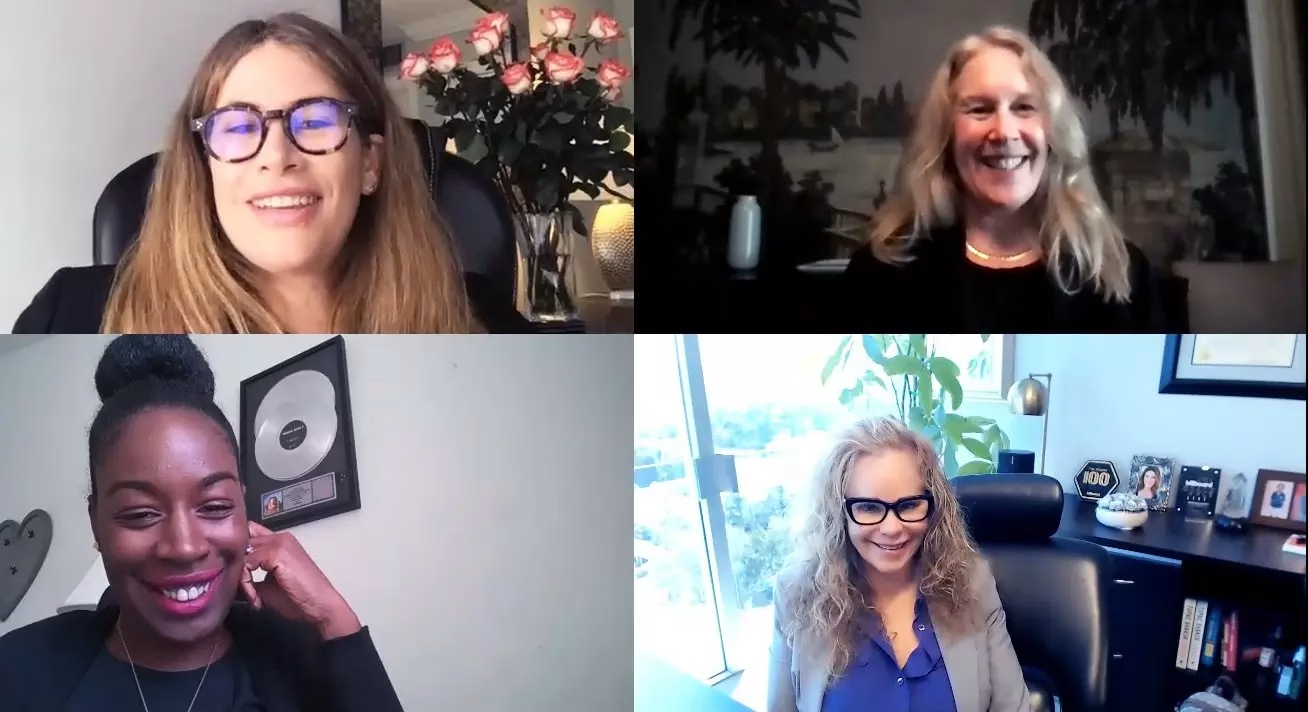
Entertainment attorneys Dina LaPolt, Shay M. Lawson and Susan Genco joined moderator and winner of the 2020 Entertainment Law Initiative Writing Competition, Sophia Sofferman, on April 15 to discuss career tips for the next generation of law students.
The GRAMMY U program, which also featured words for artists seeking legal representation, was equally inspiring as it was informative. The panelists, all with storied experience, shared moments from their careers that led them to where they are today. Dina LaPolt, founder and owner of LaPolt Law, serves as an activist for creators and celebrities in the areas of privacy, radio and copyright and fairness. Recently, she helped pass the CARES Act to support struggling musicians during the COVID-19 relief effort. Shay M. Lawson is an Atlanta-based intellectual property and entertainment attorney at the law firm of Lawson McKinley. She has protected the brand legacy of multi-platinum GRAMMY Award-winning artists, songwriters, engineers, and producers. Susan Genco, the co-president of the Azoff company, also joined the panel. At Azoff, she oversees the management of the company's diverse portfolio, including full-stop management, global music rights and iconic art group. Genco is also involved in the company's strategic legislative efforts. Between these three music industry powerhouses, the conversation naturally evolved from their passion for protecting musician’s rights to setting boundaries with clients and harnessing their power in the face of adversity.
Hearing from these trailblazers in the entertainment law sector was invaluable for those wishing to enter the demanding world of representing artists and their work. The panelists’ ability to be so transparent throughout the conversation exemplified that there are no shortcuts for true success. Here are the top 5 takeaways from the panel of experts in Entertainment Law:
Perseverance Is Critical
When asked why the women decided to pursue music and entertainment law, the panelists responded resoundingly with stories of their tenacity to break into an industry that they have loved since an early age. LaPolt credited her musical background as a contributing factor in her decision to enter the law field. Her participation in the gay and lesbian music community in San Francisco was how she started advocating for gay rights and the civil rights movement from the stage in her band Irresistible Impulse. Eventually, she was motivated to enter law school but faced obstacles as she received a low LSAT score and an untraditional path to higher education. Even with the odds against her, LaPolt truly forged her own way at every level of her career. Led by her determined spirit, she went on to work with the Tupac estate.
Be Open To A Different Path
There is no perfect path to achieving one’s dream of entering law school and practicing entertainment law. While some attorneys may have taken the straight path of a pre-law undergraduate curriculum to law school to preferred specialty path, this was not the case for the panelists and moderator. Sofferman, the author of the ELI award-winning essay "It’s My [Recapture Right], And It’s Now or Never..." has had her fair share of career changes. After working as a litigator for civil rights cases, Sofferman paused to go on the road with touring artists. Working as a production assistant signaled to her that music law was where her heart was. In the same vein, Lawson was once on the path to environmental law before taking a course in the business of baseball that made her fall in love with contracts and endorsements. Bottom line: There can and will be moments where your plans end up changing. However, the panel expressed that having a diverse background can make you a stronger professional and can also benefit your clients long-term.
Be Ready to Swim with the Sharks
So, you have your J.D. and want to start working on behalf of musicians. How exactly do you get there? According to Genco, the job search process should not be looked at as a competition, but as an opportunity. She emphasized the importance of being OK with not getting the job you think is for you: "If you're at a law firm and you want to get into entertainment law, you get out, you talk to everybody that you can, you network, you build your community. But if you go for a job and you don't get it, maybe it's just not the right job for you." Job interviews should be a two-way street: The candidate should be a perfect fit for the employer and vice versa. When considering bringing on new hires to her firm, Lawson looks for people who "can swim with the sharks, but will never compromise their character, their integrity and their values." This all underscores that being able to handle the pressure of the industry, while simultaneously keeping true to oneself, will show employers and firms that you are capable of being an advocate for musicians.
Never Stop Learning
The way music is sold and consumed is constantly changing. The panelists emphasized that keeping up with these trends is a part of the responsibility of being involved in entertainment law. For instance, LaPolt recently held a webinar on NFTs, one of the industry’s current hot topics. She expanded that if someone wants to be in the industry, they need to keep learning. "Even when I opened my own firm, the first five years all I did was study," she said. The sector of entertainment law is a highly specialized and complicated realm that requires the ability to maintain precision in problem-solving in cases of trademarks, copyrights and negotiation. Therefore, it is a life-long commitment to continuing to educate and inform yourself on these topics.
Choose Your Attorney Carefully
Lawson had insight for artists seeking representation: Not all entertainment lawyers are the same or have the same level of expertise. "There are attorneys that go out and actively find deals for their clients and they are deal makers. And then there are some lawyers that really focus more so on litigation," she explained. Depending on what you need of as an artist, you will want to do your research on attorneys and their specialties before you hire them for your case. At the end of the day, lawyers are working for your best interests, and you should ensure that their experience fits your needs. Genco added that honesty and truthfulness are some of the most important qualities in the music industry, which is, unfortunately, a space where artists are often commoditized and looked at as products. Finding someone who sees past the stardom and views you as an artist and an individual is necessary for seeking a lawyer who will go the extra mile.
For more information on how to join GRAMMY U, visit the Recording Academy's membership website.
