
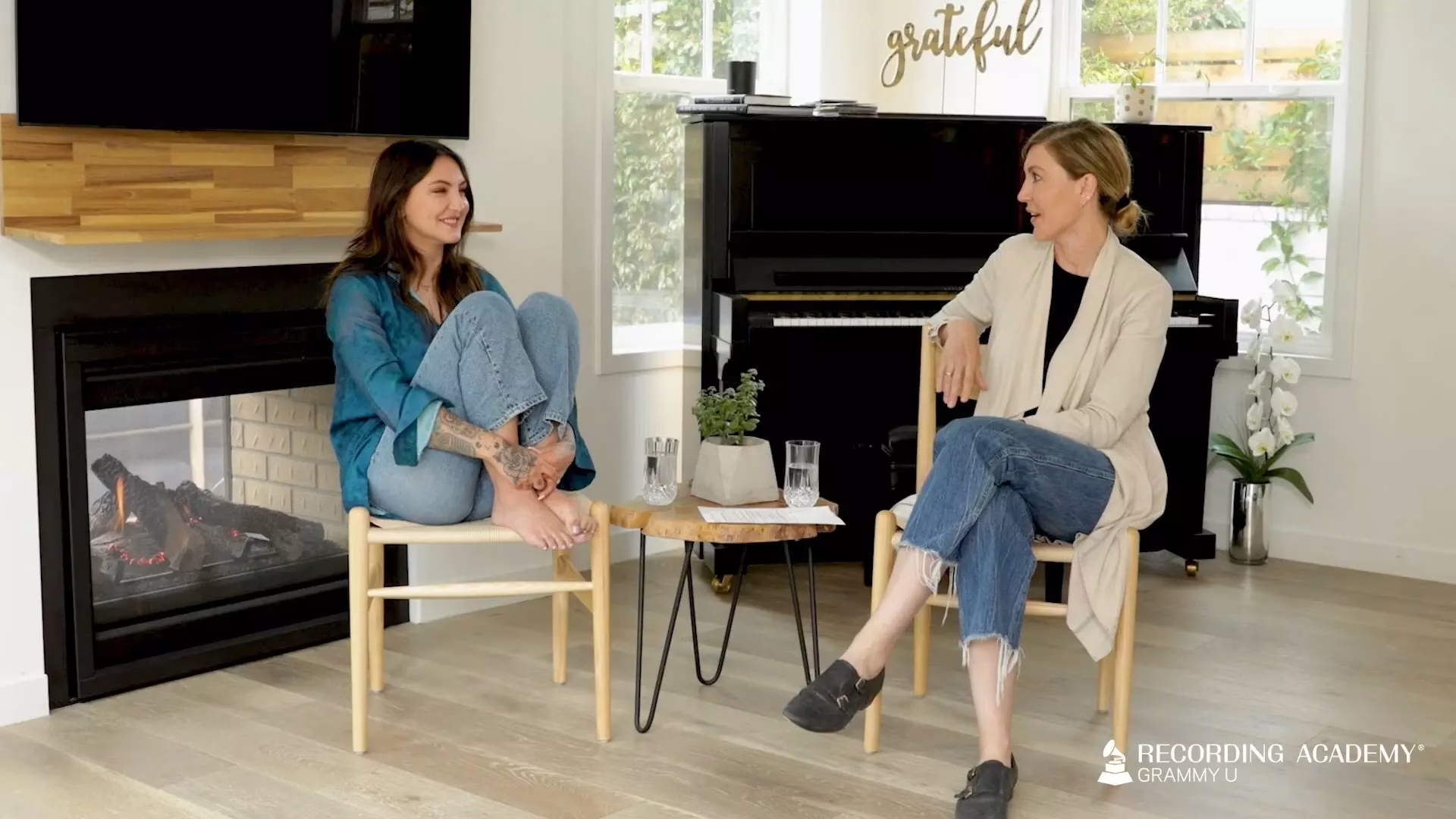
GRAMMY U, the Recording Academy's university network, hosted their annual Virtual Conference produced by student representatives on May 7 featuring multi-GRAMMY-nominated singer/songwriter Julia Michaels as keynote speaker.
The 2021 GRAMMY U Virtual Conference was an engaging educational event for students aspiring to work in the music industry. The first segment focused on insight into managing an artist’s career, finding a supportive network of music professionals, and best practices for securing job opportunities in the field.
Before an artist takes the world stage, there is a lot of behind-the-scenes collaboration that ensures all key components needed to help the musician thrive are in place, such as marketing, A&R, and management. In the case of Julia Michaels, her powerhouse team of music industry executives help her achieve her artistic vision and goals.
<style>.embed-container { position: relative; padding-bottom: 56.25%; height: 0; overflow: hidden; max-width: 100%; } .embed-container iframe, .embed-container object, .embed-container embed { position: absolute; top: 0; left: 0; width: 100%; height: 100%; }</style><div class='embed-container'><iframe src='https://www.youtube.com/embed/Kw3p6bO3MW4' frameborder='0' allowfullscreen></iframe></div>
The GRAMMY U conference kicked off with a panel highlighting a few of the key players in Michaels’ team. Moderated by GRAMMY U Los Angeles Chapter Representative Sierra Dudas, and Chicago Chapter Representative Allison Lapinsky, the 360° View: Exploring an Artist’s Team panel featured Marisa Bianco, Senior Vice President of Media at Republic Records; Donna Gryn, Senior Vice president of Marketing at Republic Records; Wendy Goldstein, President of West Coast Creative; and Beka Tischker, CEO and artist manager at Wide Eyed Entertainment.
Below are five game-changing takeaways from the segment that can help students flourish into the next generation of leaders in music. Read on to catch the five takeaways from Michaels one-on-one conversation with her manager, Beka Tischker.
Fill In Where You Need To
As Michaels’ manager, Tischker said she wears multiple hats in her job. If you are looking to be an artist manager, you might expect to be their emotional support one day and their guide on career breaking business opportunities the next. “There’s no real job description that exists,” said Tischker. She explained that it is important to keep an artist's well-being in mind, while also helping to maintain their growing career in a fast-paced industry.
Communication Is Everything
Working with an artist comes with cross-collaboration between several industry professionals. There will be some tasks that require feedback from other teammates. Gryn noted that she often goes to Bianco, Michaels’ publicist, for advice and approval on digital strategies for new song releases —whether it be choosing the right time for a music video to premiere or deciding on album cover art. Even though these duties go outside the general marketing department role, Gryn said that she keeps an open mind. “There are some things that cross over, and that’s okay,” she said. In order to successfully execute your job, Gryn said to make it a point to be communicative with everyone so that there is a mutual agreement on all business strategies.
It All Starts With The Songs
As an A&R executive, Goldstein’s responsibilities begin with taking the artist’s songs and making them into a contemporary, competitive-sounding record. This comes with finding the right producers to work with that are able to consistently work with the artists during their career, while also finding innovative ways to push artistic boundaries. Next, she works out producer deals, publishing splits and sample clearances to get the songs ready for primetime. “People see records come out every day, but there is a lot of behind-the-scenes work that goes into making something absolutely perfect because it is going to be out there forever,” she said.
Authenticity Matters
For up-and-coming musicians, Bianco emphasized the importance of integrity and honesty as an artist. It not only benefits the longevity of an artists' career, but it helps the team of professionals working for them grow and amplify their voice within various spaces of the industry. Bianco’s job in media coincides with storytelling so when she sets up interviews or appearances for artists like Michaels she knows a story that portrays the artists’ genuine intentions are welcomed by the public with open arms and has more impact. “People know what is real and what is fake,” Bianco said. “What they want is real artists.”
Look To Your Right And To Your Left
As music industry students, you can expect to be working with the music industry peers that you start out with for the rest of your career because the music industry is not as big as it seems. “One good lesson about the industry is that when you start out, you are working with all these new people, but what you do not realize is that you are all on the same journey,” Bianco said. The person you might intern with right now may go on to be a music executive in a few years and you will be working hand in hand with them for years to come, so it is important to treat people kindly. Tischker echoed Bianco’s advice by sharing a story during her college days when her professor told her class to “look to your right and to your left. These are the people that you will work with forever.”
Julia Michaels And Beka Tischker Talk Music Industry Experience
Julia Michaels
Students tuning in also enjoyed an intimate and honest keynote conversation between Michaels and her longtime manager and friend, Beka Tischker, at the end of the conference.
The chat provided a broad scope of advice for students looking to go into any sector of the multifaceted music industry and was an exemplary conversation perfect to preface the highly anticipated keynote conversation.
Here are the final takeaways from the 2021 GRAMMY U virtual conference during the charming keynote segment featuring Julia Michaels and her manager Beka Tischker:
You Are Allowed To Say No
At age 18, Michaels signed to a small indie publisher and found herself in three songwriting sessions per day, which was a lot to take on at one time. “If I would say, ‘I don’t know if I could do this today,’ it would be full of guilt trips,” she said. However, as she began to progress in her career, she eventually met someone that gave her advice to find a manager who could advocate for her and say no to projects that she did not want to take on. That is when she got introduced to Tischker and they immediately clicked and started a working relationship that is nearing 10 years.
Sing Your Story
Michaels reflected on a time early in her career, before she became a signed artist when she wrote her hit single, “Issues,” a vulnerable song she made after a hard break-up. She said that it did not feel right to hand it over to another artist because it was a personal message that would be hard to convey since the person would not know the painful experience behind the lyrics. “It was the first time I had put a lot of myself in something,” Michaels said. “I’m used to doing [songwriting] for perspective and relatability.”
Expect Fast Career Transitions
Tischker remembered the moment where Michaels went from being a behind-the-songwriter to performing on big stages such as the Billboard Music Awards. They expected her first live performance to be small, but one day after another, things changed quickly. “That was a scary time,” said Michaels. She immediately went from writing in small studios to performing in front of the world.
Balancing Multiple Roles Can Be Challenging
For Michaels, balancing songwriting for other artists while also building her career as an artist can be quite time-consuming. “I do love it,” she said. However, she has had days where she has a packed day of interviews followed by a songwriting session, leaving her to come home tired from a long workday.
Be Self-Motivated
Not every songwriting session will produce a song that everyone will love. “You can write the best song in the whole world and for some reason people do not like it,” said Tischker. That is when self-motivation should come into play in order to maintain a drive for inspiration. In addition, motivation can help in the studio when working hard to take a song to its maximum potential.
Their conversation came to a close by expressing their excitement for Michaels’ debut album, Not in Chronological Order, which was released on April 30. The album marks a significant transition in Michaels’ career and will open new doors for her as she continues to grow as a signed artist.
The conference ended with a student Q&A with Michaels and left students with important lessons on how to create a promising career path, whether they choose to become a label executive, artist manager, or a singer/songwriter.
You can now watch the conference by visiting the Recording Academy’s YouTube channel or Facebook page. For more information on how to join GRAMMY U, visit the Recording Academy's membership website.
