Signed Into Law – 119th Congress
HITS Act
A historic win for independent music creators: artists, songwriters, and producers can now fully expense up to $150,000 in U.S. studio recording costs in the year they're incurred — the same tax treatment long given to film, television, and theater.
A Historic Win for Independent Music
Key facts
Status
Signed into law July 4, 2025
Tax treatment
Same as film, TV & theater productions
Enacted via
One Big Beautiful Bill Act (P.L. 119-21)
First eligible tax year
2025 returns (filing deadline April 15, 2026)
Expense cap
Up to $150,000 cumulatively per year
Eligible works
Song demos, albums/LPs, EPs, singles, and digital-only releases produced in the U.S.
For decades, independent artists, songwriters, and producers were forced to amortize their studio recording costs over the economic life of a sound recording — even as their counterparts in film, television, and theater could fully expense production costs in the year they were incurred. That disparity tied up capital independent creators don't have to spare and made it harder to reinvest in new music.
The Help Independent Tracks Succeed (HITS) Act fixes that imbalance. On July 4, 2025, the bill's provisions were signed into law as part of the One Big Beautiful Bill Act, allowing artists, songwriters, producers, and record labels to deduct up to $150,000 in qualified sound recording production expenses in the year those costs are incurred, provided the recording is produced in the United States.
The HITS Act was first introduced in 2020 at the height of the COVID-19 pandemic, when music creators were among the first out of work as tours, festivals, and studio sessions came to a halt. After more than five years of dedicated advocacy by the Recording Academy and its members — including a near-miss in the 2021 Build Back Better Act — the bill's provisions were finally enacted in the 119th Congress.
What The Bill Does
Deductible expenses include any costs directly related to creating a recording: studio time rental fees, payments to session musicians, engineer and producer fees, mixing and mastering costs, and equipment purchases or rentals. The deduction applies to song demos, albums, EPs, singles, and digital-only releases. Marketing, touring, and distribution costs are not eligible.
The HITS Act also includes a "bonus depreciation" provision that allows expenses to be claimed in the year a qualified sound recording is "placed in service" — the time of initial release or broadcast — giving creators flexibility to find the tax treatment that works best for their situation.
Who Supported The HITS Act
The HITS Act was championed in Congress by Reps. Linda Sánchez (D-California) and Ron Estes (R-Kansas) in the House, and Sens. Marsha Blackburn (R-Tennessee) and Catherine Cortez Masto (D-Nevada) in the Senate. The Recording Academy also worked closely with House Ways & Means Chairman Jason Smith (R-Missouri) to ensure the HITS Act was included in the final domestic policy package.
The Academy led a broad coalition of music organizations in supporting the bill, including A2IM — which mobilized its network of more than 700 independent labels — and the Nashville Songwriters Association International (NSAI), which worked to ensure the HITS Act applied to songwriters. The HITS Act was also endorsed by SAG-AFTRA, the Music Artists Coalition, Artists Rights Alliance, RIAA, NMPA, SoundExchange, Global Music Rights, SESAC, NIVA, NITO, the Future of Music Coalition, Digital Media Association, ASCAP, BMI, the Gospel Music Association, the Christian Music Trade Association, and Songwriters of North America.
Making the Case for Independent Creators
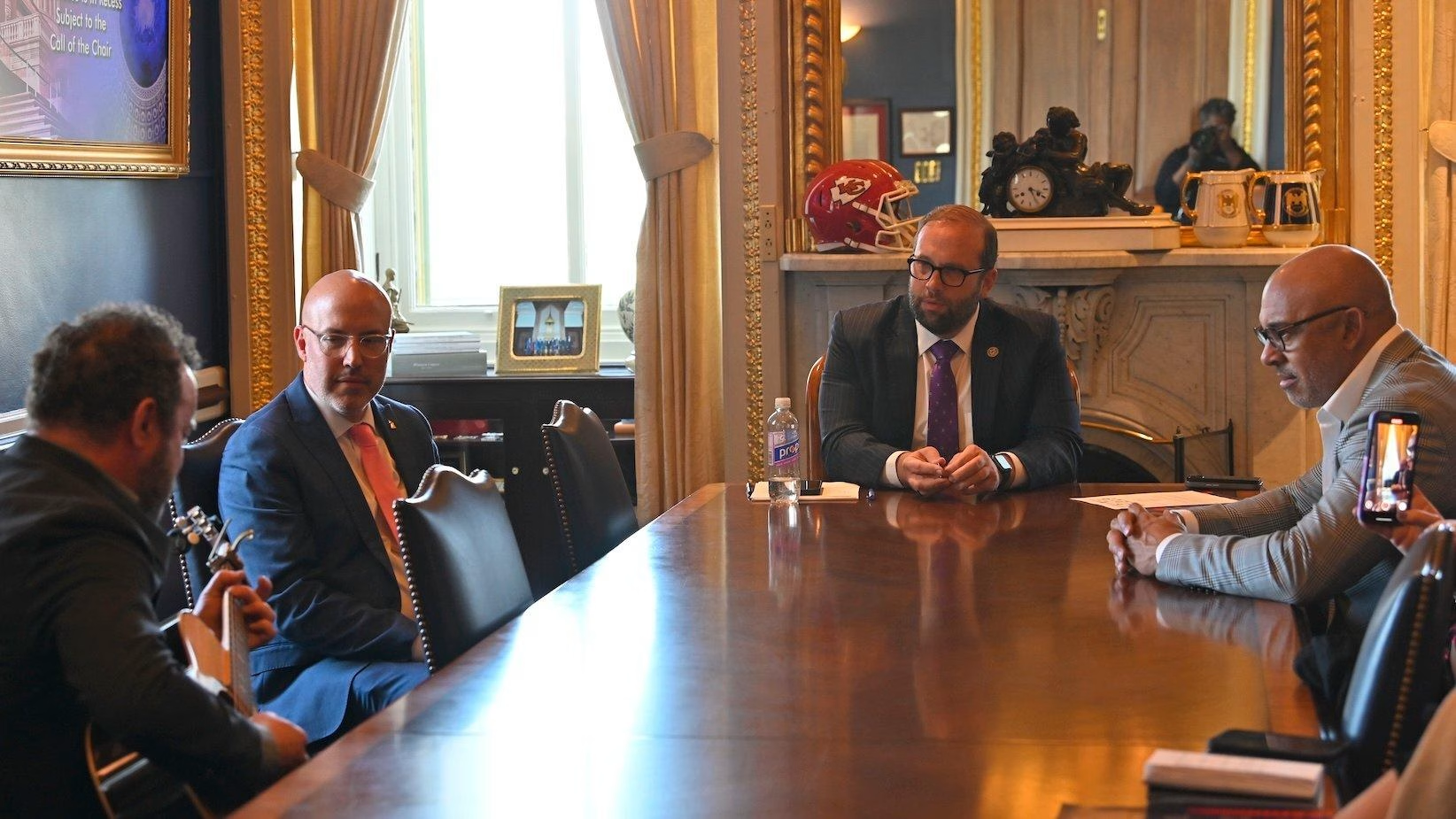
PHOTO: SHANNON FINNEY/GETTY IMAGES
Legislative Timeline
-
July 4, 2025
HITS Act Signed Into Law
President Trump signs the One Big Beautiful Bill Act (P.L. 119-21), which incorporates the HITS Act's sound recording expensing provisions — a historic win for independent music creators after more than five years of advocacy.
-
April 2025
GRAMMYs on the Hill Honors HITS Act Sponsors
At the 2025 GRAMMYs on the Hill Awards, the Recording Academy honors Reps. Ron Estes and Linda Sánchez for their tireless support of the HITS Act and the music community.
-
January 2025
HITS Act Reintroduced in the 119th Congress
Sen. Catherine Cortez Masto (D-NV) joins Sen. Marsha Blackburn (R-TN) as lead Senate sponsor of the HITS Act. Reps. Ron Estes (R-KS) and Linda Sánchez (D-CA) reintroduce the companion bill in the House.
-
2021
Near-Miss in Build Back Better
The HITS Act passes the House as part of the Build Back Better Act before being dropped from the Senate version of the bill.
-
2020
HITS Act First Introduced
Born out of direct conversations with creators during the COVID-19 pandemic, the bipartisan HITS Act is introduced in the House by Reps. Linda Sánchez and Ron Estes. Sens. Marsha Blackburn and the late Dianne Feinstein (D-CA) introduce the Senate companion bill. More than 300 Recording Academy leaders across all 12 Chapters send a letter to congressional leadership urging its inclusion in federal COVID relief.
Why Advocacy Matters to Creators
“
With today's final passage of the domestic policy bill, music creators across the country can celebrate the HITS Act becoming law, bringing much-needed support to independent artists and songwriters... This is a powerful win for independent artists, giving them the support they need to keep creating and ensuring the music industry continues to thrive.

“
This marks a historic victory for independent music creators. After years of tireless advocacy, we've righted a longstanding inequity by enabling independent labels, artists, musicians, songwriters, and publishers to fully expense recording costs — just as their peers in film, TV, and theater have long done.

“
Independent musicians are constantly struggling with higher costs and increased competition. This finally offers the relief that's long been available to those in film, television and theatre.
Tell Congress to Pass the CREATE Act
Extend the HITS Act Win
The HITS Act gave independent music creators long-overdue tax relief — and the bipartisan Creative Relief and Expensing for Audio and Television Enterprises (CREATE) Act would extend and strengthen that victory through 2030, with annual cost-of-living adjustments starting in 2027 so the deduction keeps pace with rising production costs.
Introduced in 2025 by Sens. Marsha Blackburn (R-TN) and Raphael Warnock (D-GA) in the Senate, and Reps. Judy Chu (D-CA) and Nicole Malliotakis (R-NY) in the House, the CREATE Act is endorsed by the Recording Academy, RIAA, and A2IM.
Use the tool to contact your representatives directly. It takes less than two minutes to send a message urging them to co-sponsor the CREATE Act. Not sure what to say? The action tool includes a pre-written message you can customize before sending.