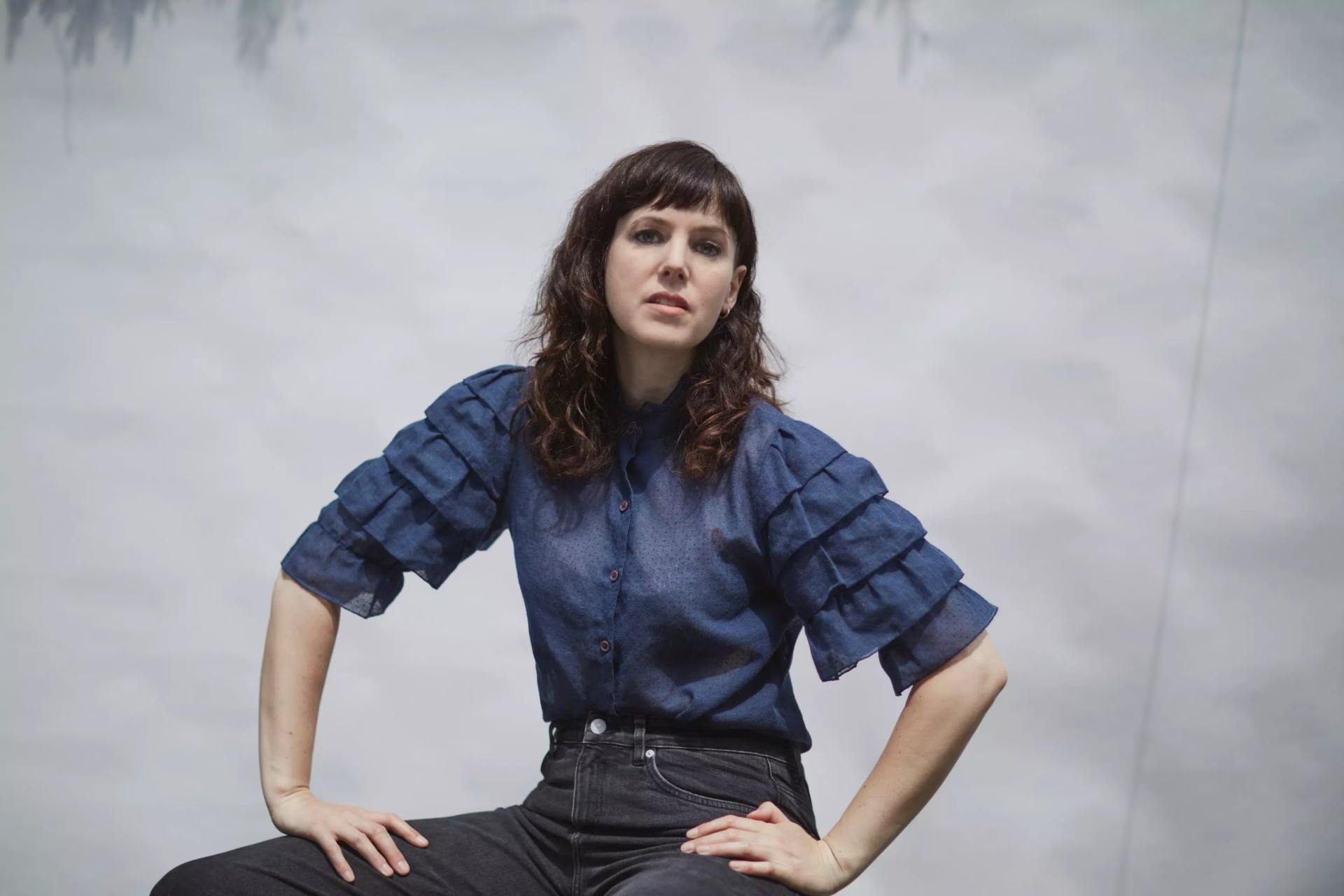
Scottish singer/songwriter, producer and composer Anna Meredith has a way of making music that may seem very calculated.
"I draw the shapes that represent the kind of graphic, also the energy of the track. And I'll do that for anything. Whether it's an orchestral piece or a piece for kids or a piece for anything," she says on the phone from Europe. "It's something that I do that helps me plan out the music because the pacing of musical ideas is really important to me."
Fusing classical music with electronic beats and genres like pop, Anna Meredith's music is an emotive journey into the experimental—some of it sounds like it could be the soundtrack of a videogame while other pieces can feel like the music you'd dance to at a club or fall asleep to. In addition to releasing three LPs and two EPs, Meredith has also composed the scores 2018 indie comedy-drama Eighth Grade and this year's Paul Rudd Netflix vehicle, Living With Yourself.
<iframe width="620" height="349" src="https://www.youtube.com/embed/05o1gMSEOLo" frameborder="0" allow="accelerometer; autoplay; encrypted-media; gyroscope; picture-in-picture" allowfullscreen></iframe>
As thoughtful as she can be about music creation, FIBS, her sophomore album out now, has her standing her ground with what feels right to her. "I know more about what I think works. I think there's more risks. Which doesn't necessarily mean more complexity," she says. "It actually sometimes means being braver with simplicity ... I set out to write something that I thought would feel open and inclusive and joyful."
The Recording Academy recently chatted with the singer/songwriter to talk FIBS, being under the spotlight in her video for "Inhale Exhale," the importance of positivity and more.
Your latest album came out three and a half years after your debut. Did you spend that time working on it?
Not nonstop. I had little bursts where I was working on it really intensely for a few weeks or even a month. Then I stopped to do other things like the Eighth Grade soundtrack, or a big orchestral piece I did for the [BBC] Proms last year. So I did quite a lot of other projects in between. But I [was] full-time, working on it from about October last year, right through to about July.
Nowadays artists are pushing out music all the time. Did you throughout that time feel pressure to hurry your album at all?
Not especially, I mean, one because there was actually all this other stuff that was happening, I released an album of a piece I did that was half full Vivaldi's "Four Seasons," half my music. So that came out last year. And there was this big orchestral thing and then the whole Eighth Grade thing. So I felt like there was still lots of content from me. In terms of my band stuff, well I wouldn't want to put it out without finding really potential. I suppose I wouldn't want to put it out unless it felt perfect. Unless I felt like this is my project that I am so proud of, and this takes me so much belief and love goes into it, that if I rushed it in any way I wouldn't be happy.
So no, I think I would have felt bad if there was nothing else out there for people to see, but there's actually been lots going on. So if people wanted to hear new stuff, there's been quite a lot of things.
What was the headspace you were in when creating your sophomore album?
I was feeling pretty good. I have been writing for a really, really long time. I work as a classical composer and increasingly for TV stuff so writing isn't unusual. It's my job and it's what I do all the time is I write music. And it wasn't like I had to get into that headspace from a completely different job. It was more carving out the time, turning down other projects to just focus on it. And yeah, pretty excited. I think, really, I did, I spend a lot of the last few years just writing. And I knew what's nice about this project is it will then also have a live life. It will have performances and I'll go on through with it. And that's kind of amazing.
So, it's nice to be thinking that next year I'll be touring and doing all this stuff that's not about just composing the whole time. So yeah, I was feeling excited. I had a very clear idea of the types of music that I wanted to be on the album. The kind of mix of stuff, that I wanted fast stuff and slow stuff and upbeat stuff and quieter things and longer tracks. I had to use just very general things that I felt would balance each other up really well. So I sort of had all those kind of parameters in my head before I began.
You compose a lot, but is there something in specific you enjoy about the songwriting process?
I don't really see it as that different to any of my other stuff. I mean if you look and listen to my orchestral music or stuff like installations or anything I've done, there's a lot of the same musical ingredients, building blocks across anything I do. So it's not like I'm trying, if I actively don't think about genre at all, I'm not thinking, here's a pop song. Here's an instrumental track, here's an orchestral track. I'm just exploring the things I like to write. The types of chords or types of rhythms, the types of cross-rhythms, things that I find exciting. I mean obviously, with the vocal tracks there's the extra thing of lyrics. That was, having in the past written operas and stuff like that where you set someone else's words, it's definitely an extra challenge when you're making the words your own.
But I was really proud of the vocal stuff in this album. I think it's a lot stronger than the previous one. And yeah, I sort of just enjoyed the challenge of as in appreciating myself but more than I did before.
What are the challenges for you?
Well, one challenge is that I'm not the best singer. But I really love singing and it feels authentic to me and part of the expression of this whole project, that it is me. As you know, I'm not the only singer. I didn't want to just get some amazing singer into this. So, the vocal stuff is sung by me and members of my band as well. One of the tracks, "Killjoy," is sung by Sam the drummer. It's really nice to me. It's not about just getting in session players. These are people, all the members of the band and myself are all being all this and just being ourselves. That's one thing, making the music work for me vocally. I have to get it in the right range. I've got a very high squeaky voice so I have to push everything up quite high. And I guess the challenge is really trying to find stuff that doesn't feel either pretentious or clumsy. Trying to get the tone of that sort of stuff right. Feels like it feels honest. But not teenage or something, not emote, not, I guess, comfy. I think juggling all that sort of stuff and then ultimately forgetting your own, just getting on with it.
How do you decide when a song of yours incorporates lyrics and when it doesn't?
So that's all kind of decided before. Before I started the whole album, I have this way that I plan any music that I write where I draw the shapes that represent the kind of graphic, also the energy of the track. And I'll do that for anything. Whether it's an orchestral piece or a piece for kids or a piece for anything. It's something that I do that helps me plan out the music because the pacing of musical ideas is really important to me. Making the positioning of where new elements come in and where certain things are revealed or that sort of stuff. So this kind of planning stage with the shapes, these kinds of graphic shapes, lots of triangles and that sort of thing, is a big part of the kind of composing process. So right from the beginning of this album, I knew that I was going to write 11 tracks and I knew the kind of mix of stuff I was going to do. So it was almost then like writing to my own brief. It wasn't like I wrote 50 tracks and picked the best 11. I knew I was going to do longer instrumental tracks, shorter instrumental tracks, more upbeat vocal stuff, quieter vocal stuff, a song for Sam to sing, the drummer. So I had a little sort of shopping list of stuff that I really wanted to do. Then I'm just fleshing each thing out.
"Inhale Exhale," that's the first time you appear in a video alone. How was that experience?
I was a bit worried about it before. I sort of have maybe taken a bit of comfort from previous videos feeling quite equal with the rest of the band and feeling like it sort of wasn't so centered around me and singing and stuff. I mean, you get into it when you've done about 9,000 takes and we'd done it right through the night. And into carwash where we filmed putting the car through the car wash countless times. And yeah, you know what, they had an amazing team who are sort of filming it, and writing it who are so, yeah. Eventually, you get over yourself. And also it's so unbelievably cold and wet. You've got to just stop freaking out about it and just get on with it eventually.
<iframe width="620" height="349" src="https://www.youtube.com/embed/yjmZLaymJU8" frameborder="0" allow="accelerometer; autoplay; encrypted-media; gyroscope; picture-in-picture" allowfullscreen></iframe>
Earlier you mentioned when you released your album, you wanted to be proud of it. Do you feel like you're proud of the album?
Yeah, I'm hugely proud of it. I mean the amount of time and money and efforts being [put into it], I don't think I could live with myself if it felt like I'd done something that I didn't feel represented me. I've been part of it because it's a huge thing for me to do. I have to clear a ton of time and sacrifice a lot and write areas all across my life to make this thing that nobody's asking for and nobody needs. And that it seems very different from my classical commissions where there is a lot of infrastructure and payment and production schedules. There's good commissions fees. This is something that I have to sort of a lot of self-belief to push these things forward.
I feel really proud of how good each track sounds. I've listened to it thousands of times and I still love it. Which I think is a good test. Not sick of any of it. I still feel excited when I hear the tracks and energized and I'm up in my seat, dancing about. I love it. Which sounds maybe really indulgent, but I don't know what the alternative would be, would be really sad.
How do you feel your sound has evolved since your debut?
I write how I write. It's kind of how I feel. And that within itself has a lot of variety. So I think I've got better at a lot of things. I think I've got better at my production stuff, the electronics I think are better. I know more ... [I] have more confidence as I get even older as a composer. And I know more about what I think works. I think there's more risks. Which doesn't necessarily mean more complexity. It actually sometimes means being braver with simplicity. I think it's having the balls to put things up against each other that I might have felt worried about before. Start flowing from something really intense to something simple. I really didn't want this record to be alienating or in any way academic or to seem like some kind of exercise. I want people to love and enjoy and sing along to. I set out to write something that I thought would feel open and inclusive and joyful.
That in itself means that's quite a hard thing to try and do to. Why I find composition really hard to do? Because you want to be transparent about what the music's doing whilst also keeping sort of things that are unexpected and exciting. So I think that's slightly more accessibility.
What do you attribute all this growth to? I hear you say that you feel braver...
Oh, I don't know. I mean I think just one, I suppose the validation and confidence from the last record. Which really I did sort of on my own with just being much more of a team effort with the band ... I feel so humbled and excited when we do a gig and people are there and saying the words. I mean that's amazing. What an amazing feeling and that people are there for that. I feel excited that people are up for coming on the journey of this stuff. And have come to other things. What's been amazing for me is people who've come to our band gigs have then come to my orchestral pieces and vice versa. I think it's really lovely that I think this whole idea of genre just matters so much less now. And people are looking at music because they like how somebody writes, no matter what the context is.
How much do you pay attention to the other pop sounds going on around you?
Not very much. I mean, I basically, I work and compose in a bit of a hermit depressing, weird tunnel where I deliberately don't listen to any music or I don't seek out any music. I don't think, "Oh, how can it be a star track?"Or "What sound?" Because just I, in the past used to sort of listen about a bit more and found that it then watered down or affected what I was writing. Instead I listen to a lot of audiobooks and I just find that I find it more creatively stronger if I'm not too influenced by anything. I'm not living in a bubble, so of course I hear lots of stuff from telly and films and things. So, I know what kind of stuff is out there, but I'm definitely not trying to write my music in the context of anyone else's.
When you travel with so many instruments, does that present any kind of challenge when you're playing music live?
I mean there's tedious, practical challenges that are almost too boring to mention. Getting a cello on a plane and getting a tuba on a plane. And that every single f***kng airline has the same policy and you walk up and each one goes, "Oh no, you need to do this. And you have to pay it anyway." So baffling. That's unbelievably infuriating.
We're still really getting started so we don't have a big team. It's us who pack it. We set everything up, we pack everything down, we sell the merch. And then we parole 22 suitcases of stuff on to the next place. Pack them like Tetris into the boot of a car and off we go. It's a challenge but it's also really exciting. I think because the band and I get on really well and we try and make it all fun as it can be. The last time we were in the States, we all went skiing and we went to Six Flags [theme park] ... We just did all this like fun stuff around the tour that kind of balances out all the lugging and packing and stuff that's the other side of it.
What have you learned from yourself as an artist throughout these years?
That's a good question. Let me see. What I learned? I mean, there's stuff that would be useful for, worry less over general life gubbins about trying to just do stuff under your own terms. And not just tune in to your usual stuff where you could have a lovely review with one bad light or it haunts you forever. So that's just, I guess, confidence.
And I think also just trying to stay positive. I think the previous album ends quite sadly. It's got quite a sort of heartbreaking little final track. And I wanted this album, even though a lot of the vocal stuff has quite a lot of self-criticism and inward-looking and hesitation and quite negative. But the final track is made to be open and up in the sense of looking outward. So I think there's optimism, that even though it seems ... everything [in the world] seems like it's just going to shit. We all just wake up and we're like, "Oh my God, we're being managed by idiots" and we think what is that. So, it's so depressing and it can also really bleak and hopeless. So I think trying to stay positive and not just lean into that negativity. Try and do something with energy and positivity is something I can kind of think about.
With Brexit and everything going on, how do you feel like you as an artist will be affected by that?
Oh my God, I feel most of us are just too scared. Well, one, we don't have a clue. The whole country feels like everything's changing every day. That there's just the news. You wake up and see what fresh hell have they got in store for us today or what? It's like a terrible, terrible box set you're watching that just never ends and it's awful. And the implications for smaller bands like us touring are awful. Going to Europe, or getting to the States is already a huge deal financially for us, getting the visas and things. Where it's a really big investment and the idea of footing doing that again for Europe is really daunting. And I think even just on a broader level, this idea of there's then a phobia of this idea of some jingoistic old-fashioned rural, this sort of really almost well, racist, to be honest, idea of what Britain is, just feels hideous.
So yeah, I don't know. It's fairly easy as I'm sure it's for you guys to feel like a lot of people, us and all our friends have no idea who the rest of your country is. You feel very alienated. To be honest, it's kind of reached a point where, when you meet up, when I meet a pal, the first thing we all sort of assess is that we can't talk about it. We can't talk about Brexit or we're just going to end up in silence. Going to cry. So yeah, so it's awful. And we really hope that something might get sorted. But even if it did you sense that the country is just divided in two at the moment, which is a scary thing.
What are you up to next?
Next we'll be touring, which is really exciting. And I just finished Living with Yourself, the music for the Netflix show that came out a [few] of weeks ago, the Paul Rudd one. So that's been really nice. Lots of people have got in touch about that. Then next year composing-wise, I'm trying to do a little less because I've just written back-to-back for years. But I think the next thing maybe writing something for a VR project, which I'm quite excited about. That's underway, but I'm hoping mostly to be doing some more practical stuff and focus on just getting the band and our 92 suitcases out on the road.
The Roots, Debbie Harry & More Team Up With GRAMMY Music Education Coalition For Auction